
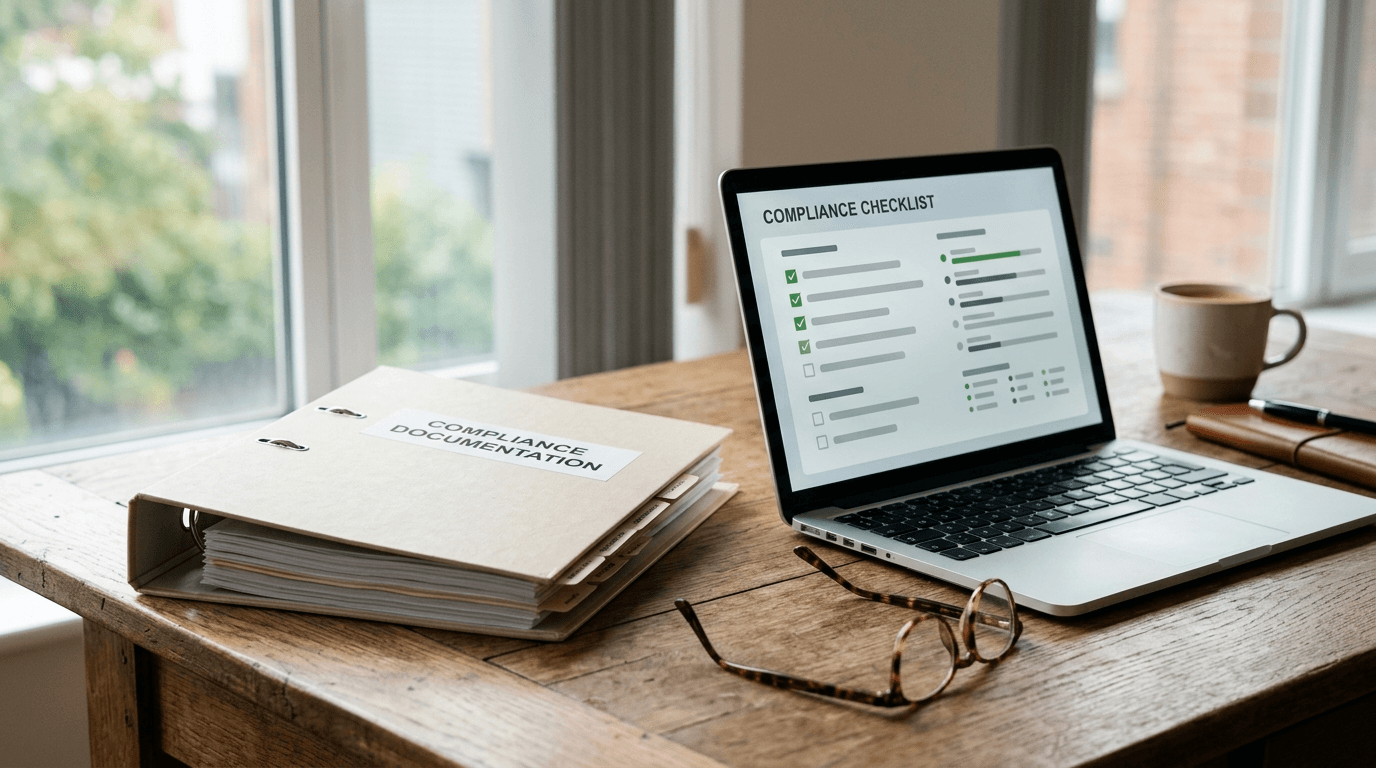
SOC 2 audit cost is really three costs that arrive at different times: the readiness work to build and document controls before an auditor ever shows up, the auditor's fee for the examination itself, and the ongoing work of keeping evidence current so next year's audit is not a repeat of the first. The CPA firm sets its own fee, and it rises with a Type 2 report, with each criterion and system added to scope, and with evidence the auditor has to chase. Businesses that budget only for the auditor are usually surprised twice.
NetSys handles the SOC 2 readiness and ongoing portions, quoted per business on a month-to-month basis; the audit fee is paid to an independent CPA firm and is never part of our number. This guide explains each part of SOC 2 compliance cost, how Type 1 and Type 2 change them, how to choose an auditor and how to compare proposals, and ends with a checklist of what to gather before you ask for quotes.
What are the three parts of SOC 2 cost?
| Cost component | What it includes | Who you pay |
|---|---|---|
| Readiness assessment | Gap analysis against the Trust Services Criteria, scope decisions, a remediation plan | Readiness consultant or managed provider |
| Remediation | Policies, access reviews, MFA, logging, vendor management, backup and incident procedures | Provider labor, plus tooling you may need to buy |
| Compliance tooling | Evidence collection platform, policy templates, auditor portal | Software vendor, per year |
| Auditor fee | The examination by a licensed CPA firm and the report | The CPA firm, separately |
| Supporting tests | Penetration test and vulnerability scans that auditors and customers expect | Testing provider |
| Ongoing operation | Quarterly access reviews, evidence upkeep, control monitoring, annual re-audit | Internal time or managed provider |
Type 1 or Type 2: how does the choice change the price?
A SOC 2 Type 1 report describes your controls and confirms they were designed properly at a single point in time. A Type 2 report covers an observation period, typically several months to a year, during which the auditor tests whether the controls operated as described. Type 1 costs less because there is less to examine, and it can be obtained sooner, which is why companies under pressure from a customer often start there.
Type 2 is what most enterprise customers eventually ask for, because a point-in-time report says little about how a business behaves on an ordinary Tuesday. The higher SOC 2 Type 2 audit cost is partly the auditor's larger fee and mostly the operational discipline: every access review, every change ticket, every backup test during the window has to happen and leave evidence. A common path is a Type 1 to satisfy an immediate request, followed by a Type 2 over the next observation window, with the readiness work done once for both. Our guide to SOC 2 Type 1 vs Type 2 compares the two reports in more detail.
What drives the auditor's fee?
Auditor fees are set by the CPA firm, not by your IT provider, and they move with a few things. Scope: every SOC 2 covers the Security criteria; adding Availability, Confidentiality, Processing Integrity or Privacy adds controls to test. System boundary: one application in one cloud is simpler than several products across multiple environments. Observation period, for Type 2. Evidence quality: a business with a compliance platform and tidy evidence takes fewer auditor hours than one handing over screenshots by email. Firm size and reputation: larger firms charge more, and some customers recognize their names. Get quotes from more than one licensed CPA firm, and ask each what a clean evidence package would save.
How do you choose a SOC 2 auditor?
Choose the firm on quality as much as on fee, because your customers read the name on the opinion and some will reject a report that looks like a template. In February 2026 the AICPA's Journal of Accountancy warned about vendors selling SOC 2 reports as fast and easy, and advised companies to vet the CPA firm before engaging it. What we look for when clients ask us to help them choose:
- A licensed CPA firm. SOC examinations are performed by CPAs under AICPA attestation standards. A compliance software vendor that is not a CPA firm cannot attest to your controls, even when it sells the report as part of a package. Confirm the firm's license with the state board of accountancy.
- Peer review. The AICPA says almost every firm that performs accounting or auditing work must undergo peer review. Ask for the firm's most recent results. Peer reviewers now look harder at SOC 2 work: in May 2026 the Journal of Accountancy described AICPA guidance that treats SOC 2 engagements producing identical reports, risk assessments, sample sizes and testing procedures for different clients as nonconforming.
- Experience with companies like yours. Ask how many SOC 2 examinations the firm performs for companies of your size, on your cloud platform and identity stack, and ask for client references.
- Independence from your readiness work. The firm that tests your controls should not be the one that designed or operates them. Ask how the firm maintains its independence, and keep readiness with a separate provider.
- A redacted sample report. SOC 2 reports are restricted to specified parties, so expect a redacted sample under NDA. Check whether its system description and tests read as if they were written for a real company.
- Scope and observation period in writing. Ask which Trust Services Criteria and systems are in scope, how long the observation period runs and when it starts, what sampling the firm will use, and when the report will be delivered.
Be wary of an offer that is unrealistically fast or cheap, or that bundles the examination into a software subscription. A report your largest customer rejects costs more than the fee it saved.
Do you need a compliance automation platform?
Compliance platforms connect to your cloud, identity provider, device management and code repositories, collect evidence continuously, hold your policies, and give the auditor a portal. For a business with modern infrastructure they cut the readiness and audit hours noticeably, and they make the ongoing work tolerable. They are a real annual cost, they need someone to configure and watch them, and they do not write your policies or fix your controls; a dashboard full of red items is still a business without SOC 2.
Very small companies with simple environments sometimes skip the platform and manage evidence in a shared folder for a Type 1. That saves the subscription and costs hours, and it becomes hard to sustain through a Type 2 observation window. Our view is that the platform earns its fee once a Type 2 is on the calendar, and that the decision belongs in the readiness assessment rather than after the auditor has been engaged.
What internal costs do businesses forget?
- Staff time. Someone inside the company owns SOC 2, answers the auditor, approves policies and attends the reviews. That is hours every month, and more in audit season.
- Tooling gaps. Readiness often reveals that logging, MFA coverage, device management or backup testing need real upgrades. Those are security projects with their own cost, and they are the reason the exercise is worth doing.
- Vendor management. Your own vendors' SOC 2 reports or security questionnaires have to be collected and reviewed, every year.
- Penetration testing. Auditors and customers expect a recent test. NetSys runs a free Tier 1 external test and quotes source code testing per codebase; our penetration testing page covers the tiers.
- The second year. SOC 2 is annual. Budget for the re-audit and for the ongoing work between audits from the start.
How do you compare SOC 2 readiness quotes?
Ask whether the quote includes remediation labor or only the gap assessment, whether policies are written for your business or handed over as templates to fill in, which Trust Services Criteria are in scope, whether the provider will sit in the audit meetings, and what the ongoing work costs after the report. Ask for clarity on what is excluded: the auditor's fee should always be separate, and the compliance platform subscription usually is. A provider that quotes a single all-in SOC 2 price without naming the CPA firm is bundling something you should see itemized. For the broader picture, our guide to SOC 2 compliance for small business explains what the report is for and who asks for it.
Checklist: what to gather before asking for SOC 2 quotes
Readiness providers and CPA firms quote faster, and their quotes compare more cleanly, when each one gets the same facts. Gather these first:
- The request itself. The customer's contract clause or questionnaire, the report it names (Type 1 or Type 2, and any criteria beyond Security) and the date it needs the report.
- The system boundary. The product or service the report will cover, the cloud accounts and applications behind it, your identity provider, the devices staff use and the vendors that touch customer data.
- The controls you already run. MFA coverage, device management and encryption, logging, backups with a recent restore test, access reviews and written policies, with whatever records each one produces. Our SOC 2 compliance checklist lists the controls and evidence by criterion.
- An internal owner. The person who will approve policies, answer the auditor and attend the reviews, and the hours each month they can give it.
- A tooling decision. Whether you will use a compliance platform or keep evidence by hand, so readiness and audit quotes assume the same evidence process.
- Recent testing. The date and scope of your last penetration test and vulnerability scan.
- Year two. Ask every provider and CPA firm to price the following year as well, because customers expect a new report every year.
To prepare before the audit starts, our SOC 2 readiness services cover the gap assessment, the controls and the evidence; the CPA firm then performs the audit.
Frequently asked questions
How much does a SOC 2 audit cost for a small company?
The auditor's fee is set by the CPA firm and depends on Type 1 or Type 2, the criteria in scope, the system boundary and how clean your evidence is; ask two or three licensed firms for quotes. On top of that sit readiness and remediation labor, a compliance platform if you use one, a penetration test, and staff time. NetSys quotes the readiness and ongoing portions per business, month to month, and the audit fee is always paid to the CPA firm directly.
How long does it take to get a SOC 2 report?
Readiness for a small company with a reasonably modern environment often takes a few months, depending on how many gaps remediation reveals. A Type 1 can follow soon after readiness is complete. A Type 2 requires an observation period, commonly several months to a year, before the auditor can test that controls operated throughout. Businesses that need a report for a customer deal should start readiness early, because the calendar, more than the budget, is usually the constraint.
Is SOC 2 a certification?
No. SOC 2 is an attestation report issued by a licensed CPA firm under standards set by the AICPA. There is no certificate and no pass or fail; the report contains the auditor's opinion and any exceptions found, and customers read it to judge your controls for themselves. When people ask about SOC 2 certification cost, they mean the readiness work plus the CPA firm's examination fee. That matters for cost because there is nothing to renew with a certifying body, but the report carries a date, and customers expect a new one each year. Our SOC 2 glossary entry explains the report and the Trust Services Criteria.
Do we need SOC 2 if we already have cyber insurance or ISO 27001?
Cyber insurance is not evidence of controls, so it does not substitute for a SOC 2 report when a customer asks for one. ISO 27001 overlaps heavily with SOC 2 on the underlying controls, and a business with a current ISO certificate has done most of the readiness work already, but some customers, particularly in the United States, ask for SOC 2 by name. If both are likely to be requested, plan the control set once and evidence it for both.
Can our IT provider be our SOC 2 auditor?
No. A SOC 2 report has to come from a licensed CPA firm performing the examination under AICPA standards, and that firm has to be independent of the controls it tests. An IT provider that configures your systems and collects your evidence is part of what the auditor examines, so it cannot also be the examiner. Its job is readiness: closing the gaps, running the controls and answering the auditor's requests. NetSys prepares companies for the examination and never issues the opinion.
Does a SOC 2 Type 2 audit cost more than a Type 1?
Yes. In a Type 2 the auditor tests whether your controls operated throughout the observation period, sampling records from across those months instead of confirming the design on one date, so fieldwork takes longer and the fee is higher. The larger cost is usually yours: running every control and keeping its evidence for the whole period. A Type 1 followed by a Type 2 means paying for two examinations, so if your customer can wait for the Type 2, going straight to it saves one fee; if the customer needs something sooner, a Type 1 is the usual bridge.
What is included in SOC 2 readiness from NetSys?
Six phases, each ending with something concrete: scoping of the Trust Services Criteria and systems the report will cover, with a draft system description; a readiness assessment that produces a dated gap list with an owner for every item; remediation in Microsoft 365, Entra ID, Intune and your cloud platform, plus policies your team will follow; an evidence calendar with automatic exports where possible; the observation period, for a Type 2; and support through the CPA examination, with requests answered from the evidence library. The controls keep running after the report is issued.
How does a SOC 2 readiness engagement start?
With a scoping session that settles which Trust Services Criteria and which systems belong in the report. Keeping scope honest and small lowers both the readiness cost and the audit fee. An engagement can also begin with our free remote external penetration test, limited to available information and an agreed external scope. The gap assessment follows, and we help you choose an independent CPA firm early enough for it to confirm the scope, its independence and the evidence it expects.
What affects the cost of SOC 2 readiness?
The systems and criteria in scope, how mature your controls already are, how much remediation the assessment finds, how much evidence can be exported automatically and which report you need. NetSys publishes no rate card; we quote readiness and the ongoing work per business, month to month. Controls we already run under a managed agreement can supply records, but each still has to be checked against the agreed scope. The CPA firm's fee and any compliance platform subscription are separate lines.
Who handles support and escalations during the audit?
NetSys engineers answer the auditor's request list from the evidence library and join the calls, while your internal owner approves policies and speaks for the business. Anything the auditor questions goes to the named owner of that control. Day to day, our help desk is staffed seven days a week from 4 a.m. to 11 p.m. Eastern, with monitoring and emergency service around the clock.
Getting ready with NetSys
NetSys runs SOC 2 readiness for small and mid-sized businesses: the gap assessment, the remediation, the policies, the evidence process and the ongoing operation between audits, quoted per business and delivered month to month, with the audit itself performed by an independent CPA firm of your choosing. See our SOC 2 readiness page, or our vCISO services for the leadership layer that keeps a compliance program on track.
Book a call with the report your customer is asking for, the systems involved and any CPA firm you are already talking to, and we will separate the readiness work, the remediation, the evidence and the examination so you can budget each line.
Sources and further reading
- AICPA: SOC 2 examinations, the standard-setter's SOC 2 page, with its guides to the examination and the Trust Services Criteria.
- NIST SP 800-115, for the testing auditors and customers expect alongside SOC 2.
- AICPA & CIMA: Peer review, which almost every firm that performs accounting or auditing work must undergo.
- Journal of Accountancy: Promises of "fast and easy" threaten SOC credibility (February 2026), on how to vet a CPA firm before engaging it.
- Journal of Accountancy: AICPA guides peer reviewers to address SOC 2 risks (May 14, 2026), on SOC 2 engagements that are not tailored to each client.


Discuss soc 2 readiness services for your business.
Tell us about your current systems, the result you need and your timeline. We will discuss the work, responsibilities and pricing before you decide on an engagement.