

MPLS is a private network that a carrier builds between your sites, bought circuit by circuit on a contract, with the carrier engineering the path. SD-WAN is an overlay you control: a device at each site that runs over whatever circuits you choose, usually two internet connections, and sends each application down the best-performing path, with automatic failover. In MPLS vs SD-WAN, a business whose applications have moved to the cloud is usually better served by SD-WAN, while MPLS still fits where a carrier-managed private path between sites matters most, and many businesses run both while they migrate.
Whether SD-WAN is worth it at all for a small business is covered in our SD-WAN guide for multi-location businesses; this guide is the head-to-head with MPLS. For the security models that build on SD-WAN, see SASE vs SSE vs SD-WAN.
What is the difference between MPLS and SD-WAN?
MPLS, multiprotocol label switching, is a forwarding technique carriers use inside their networks. The service businesses buy on top of it is often a BGP/MPLS IP VPN, specified in the IETF's RFC 4364, which gives each customer a private routed network across the carrier's backbone. SD-WAN, as Mplify (formerly MEF) defines it in MEF 70.2, is a connectivity service that creates an overlay network over one or more underlying connections and forwards application flows by policy, choosing paths dynamically. Those underlying connections can include an MPLS VPN as well as business internet over fiber, cable, DSL or LTE.
| MPLS | SD-WAN | Hybrid | |
|---|---|---|---|
| What it is | A private routed network inside one carrier's backbone | An overlay you manage across any circuits | SD-WAN running over MPLS and internet circuits together |
| Who runs the network | The carrier | You or your provider | The carrier runs MPLS; you or your provider run SD-WAN |
| Transport | A carrier access circuit at each site | Business internet, fiber, cable, LTE or MPLS | MPLS for some traffic, internet for the rest |
| Encryption | Not by itself; RFC 4364 says the VPN does not encrypt data | Can encrypt traffic between SD-WAN edges | Encrypt at least the internet paths |
| Failover | Needs a second circuit and routing to use it | Automatic, per application, across all circuits | MPLS becomes one path among several |
| Cloud and SaaS | Often reached through a central site | Local internet breakout at each site | Local breakout for SaaS, MPLS between sites |
| Adding a site | Order a new carrier circuit and wait for it | Install an edge device on local circuits | Either |
| Best for | Latency-sensitive traffic between sites, carrier-managed service | Cloud-first businesses with several sites | Migrating gradually, or keeping MPLS for specific traffic |
Is MPLS more secure than SD-WAN?
Private is not the same as encrypted. RFC 4364 explains that BGP/MPLS VPNs keep one customer's traffic separate from another's, but that the methods do not by themselves encrypt the data or show whether it was tampered with in transit; if you need that, cryptography has to be added on top. SD-WAN can encrypt traffic between sites, a capability MEF 70.2 lists, and over internet circuits you should require it.
The trade-off is exposure. An SD-WAN edge sits on the internet, so its firmware and administrative access need the same care as any firewall: prompt patching, MFA on management and logs someone reads. With MPLS the carrier's network is the boundary, but any site that also has its own internet connection for cloud apps needs a firewall anyway.
Which performs better for voice, video and cloud apps?
For traffic between your own sites, a well-run MPLS circuit is predictable, and that is what it is sold on. For cloud applications the picture changes. Microsoft's Microsoft 365 network connectivity principles note that enterprise WANs often backhaul traffic to a head office before it reaches the internet, recommend local internet egress at each location instead, and list migrating from a traditional WAN to SD-WAN among the ways to improve performance. Teams calls and SharePoint files from a branch take a shorter route through that branch's own internet connection than through a hairpin to headquarters.
SD-WAN also measures its paths continuously. MEF 70.2 describes the service monitoring the available forwarding options and changing how each application's packets are sent to meet its policy, so a call can move off a circuit that starts dropping packets.
Can SD-WAN replace MPLS, or should you run both?
Both are common. MEF 70.2 describes the hybrid WAN, SD-WAN over an MPLS VPN and internet circuits together, as perhaps one of the most popular uses, because many businesses already have both. A practical migration:
- Inventory circuits and contract end dates for every site, with what each one carries.
- Add a second internet circuit or a cellular link at one site and install SD-WAN alongside the MPLS circuit.
- Move internet and cloud traffic first, then site-to-site traffic, measuring call quality and application response as you go.
- Repeat site by site, then decide at renewal whether MPLS stays as one path, shrinks or ends.
Which fits a small team?
- One site: neither. A good firewall, a reliable primary circuit and a cellular or second-carrier backup cover it.
- Two to ten sites on cloud applications: SD-WAN over two circuits per site, managed by someone who watches it.
- A few sites with a central server and modest traffic: an encrypted site-to-site VPN between business firewalls may be enough. In our published multi-site medical practice case study, business-grade firewalls at all seven locations were joined in a site-to-site VPN mesh, giving every office encrypted, real-time access to central systems.
- A carrier contract and latency-sensitive applications between sites: keep MPLS as one path and add SD-WAN beside it.
What affects cost, implementation and support?
- Circuits: the carrier prices MPLS per site by access circuit, bandwidth and term. SD-WAN runs over circuits you buy from any carrier, which MEF 70.2 notes may be billed at a flat rate or by usage, and you usually want two per site.
- Equipment and licenses: SD-WAN needs an edge device and a subscription for each site; MPLS needs a router at each site, supplied by you or the carrier.
- Lead times: new circuits come with carrier lead times, so order them first. A new SD-WAN site can start on local internet while a better circuit is installed.
- Support: MPLS faults go to the carrier; SD-WAN needs someone to watch the paths, update firmware, manage policies and chase whichever carrier owns a failing circuit.
Compare full quotes over the same term, including both circuits at every site, the edge devices, the licenses and the management.
How does NetSys connect multi-site businesses?
Our managed network services record every site's equipment, circuits, carrier contacts and contract terms, monitor agreed devices and links, and escalate to the carrier when a circuit fails. For each site we assess a secondary circuit or cellular option against location, capacity and cost, and test failover in an approved window, including how applications behave. On the security side we install and manage Cisco Meraki MX and Fortinet FortiGate firewalls and specify Fortinet where a site needs SD-WAN across several circuits. Engineers work on site across New York City, Long Island, Westchester, the Hudson Valley, North Jersey and Fairfield County, CT; sites elsewhere are supported remotely from Brooklyn, with visits scoped per engagement.
Book a call with an engineer with your circuit list and contract end dates, and we will map whether SD-WAN, MPLS or a mix fits each site.
Frequently asked questions
Is SD-WAN cheaper than MPLS?
It can be, because SD-WAN runs over business internet circuits you can buy from any carrier instead of a private circuit at every site. The total still includes two circuits per site, edge devices, licenses and management, so compare full quotes over the same contract term rather than circuit prices alone.
Is MPLS encrypted?
Not by itself. RFC 4364, which defines BGP/MPLS IP VPNs, says the service keeps customers' traffic separate but does not encrypt it or detect tampering. If you need encryption across MPLS, it has to be added, for example with IPsec between your own devices.
Is MPLS obsolete?
No. It still fits traffic between sites that needs a carrier-engineered private path. What has changed is that cloud applications are reached over the internet, so many businesses now use MPLS as one path within SD-WAN, or replace it at renewal.
Does SD-WAN work with cellular backup?
Yes. SD-WAN can use a cellular link as one of its paths, and MEF 70.2 lists LTE among the access technologies, then fail over to it automatically when wired circuits drop. Check the data plan, because a cellular link carrying a whole office can use a lot of data.
MPLS versus SD-WAN: which is better for VoIP?
Between your own sites, MPLS gives a predictable path. For cloud phone systems and Teams, SD-WAN with local internet breakout usually gives the shorter route, and its per-application steering can move calls off a degrading circuit. Test call quality on both before you decide.
Which option fits a small team?
One site needs neither. Two to ten sites using cloud applications usually fit SD-WAN over two circuits per site. Keep MPLS where a contract or latency-sensitive traffic between sites justifies it, and let SD-WAN choose between the paths.
What affects the cost of SD-WAN or MPLS?
The number of sites, the circuits at each, contract terms, edge devices and licenses, carrier lead times and who monitors the network. Ask every bidder to price the same sites, the same bandwidth and the same term.

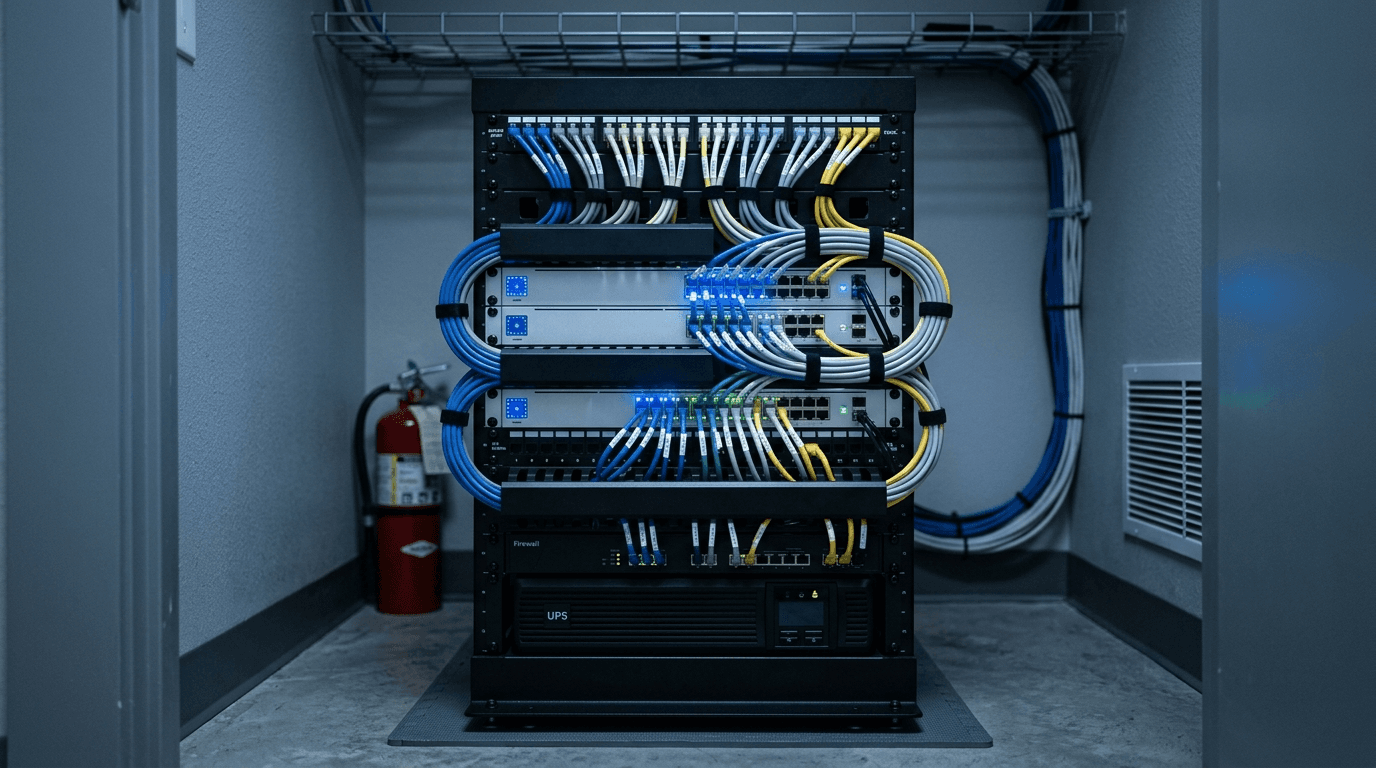

Discuss network & wi-fi management for your business.
Tell us about your current systems, the result you need and your timeline. We will discuss the work, responsibilities and pricing before you decide on an engagement.