
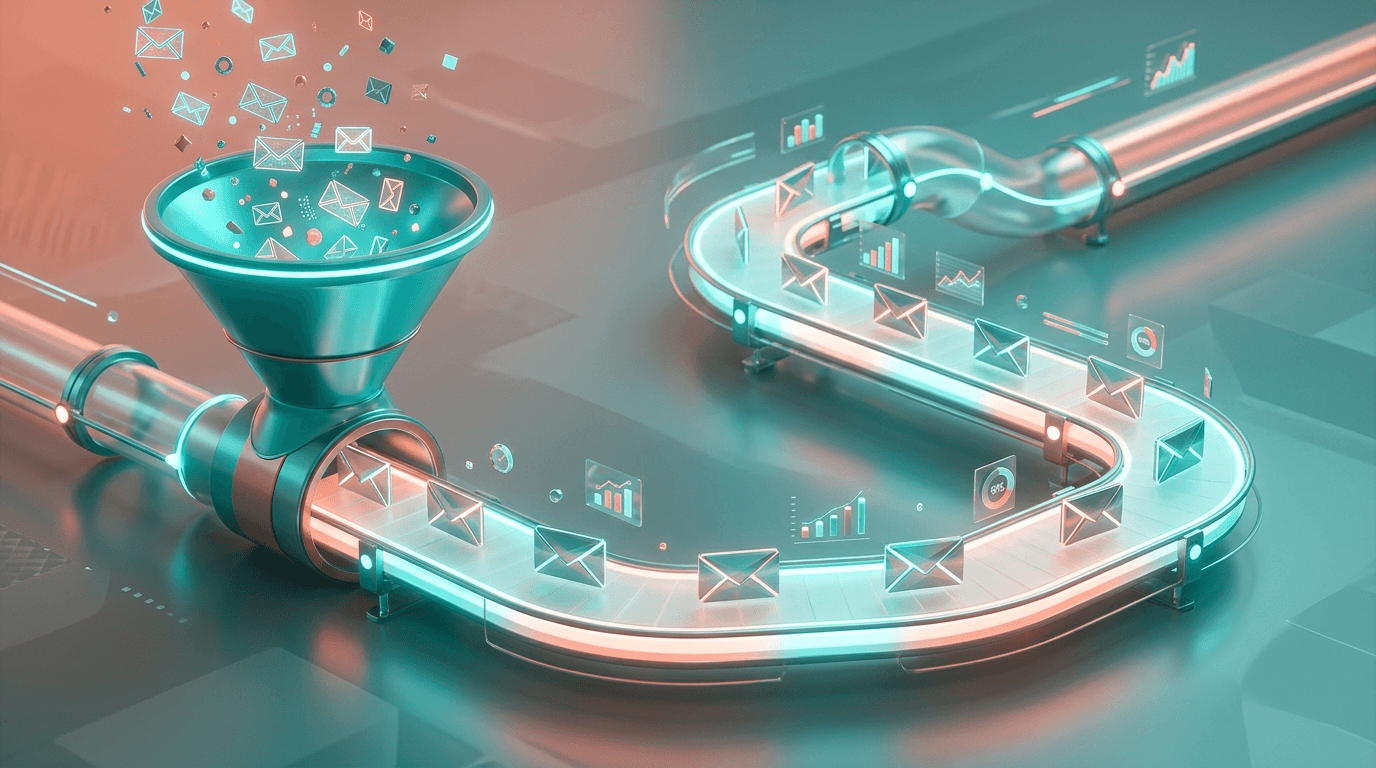
AI marketing automation lets a small team run the follow-up, segmentation, and reporting that used to need a dedicated marketing hire. It handles the repetitive middle of marketing: sorting new leads, sending the right message at the right time, scoring who is ready to buy, and telling you what worked. Done well, it turns a leaky, manual funnel into something that runs while you sleep. Done carelessly, it just automates spam.
Here is what the tools actually do for a small business, what results are realistic, and how to start without lighting money on fire.
What does AI marketing automation actually do?
It connects your lead sources to a set of rules and models that act on them automatically. A new contact fills out a form, and the system tags them, drops them into the right email sequence, alerts sales if they look hot, and updates your dashboard. The AI part sharpens the timing, the segmentation, and increasingly the copy itself.
The jobs it takes over: email and SMS nurture sequences, lead scoring, list segmentation, social post scheduling, ad audience building, and first-draft content. Most small businesses run it on top of a CRM or an all-in-one platform such as HubSpot, Mailchimp, or ActiveCampaign.
Is it worth it for a small business?
For most businesses that already generate leads and struggle to follow up, yes. Adoption is now dominated by smaller companies rather than enterprises: small and mid-sized firms made up roughly 63% of marketing automation deployments in 2025 (Mordor Intelligence). Oracle's widely cited research found automation users can see up to a 451% increase in qualified leads, with most teams reporting a return within six months.
The catch: those numbers come from businesses that had something to automate. If you have no list, no offer, and no lead flow, automation has nothing to work with. Fix the inputs first.
Where does the ROI actually come from?
Three places, in order. Speed to lead comes first: automated follow-up reaches a new inquiry in seconds instead of hours, while they are still paying attention. Consistency is second: nobody forgets the fifth follow-up email, so more slow-moving leads eventually convert. Focus is third: scoring pushes your best prospects to the top so your team spends its time on people ready to buy. Behavior-triggered email tends to outperform one-off blasts by a wide margin for the same reason.
What should a small business automate first?
Start narrow. Pick the one sequence that touches revenue most directly, usually new-lead follow-up, and automate it end to end before adding anything else. A sensible first 90 days:
- Instant reply plus a three-to-five email nurture for every new lead.
- Lead scoring so sales knows who to call first.
- A monthly newsletter built from AI-drafted, human-edited content.
- One dashboard that shows leads, replies, and closed deals in a single view.
This overlaps with sales work, so it pairs naturally with AI sales follow-up automation. Keep a person reviewing anything the AI writes before it goes out.
What are the risks?
The big ones are tone and deliverability. AI can produce generic copy that sounds like everyone else, which hurts more than it helps. It can also send too much, too fast, and land you in spam folders or trip privacy rules like CAN-SPAM. Keep frequency sane, honor unsubscribes automatically, and make sure a human owns the brand voice. Feeding customer data into AI tools raises the same governance questions we cover in our work on AI email management.
Frequently asked questions
What does AI marketing automation cost?
Entry platforms start around $30 to $100 a month for a small list, with AI content and advanced scoring on higher tiers. Budget for setup as well. The software is cheap; the strategy, integrations, and content are where the real cost and the real value sit.
Do I need a marketing team to run it?
No, but you need someone to own it. Automation replaces manual tasks, not judgment. A single capable owner or an outside partner can run a small-business setup in a few hours a week once it is built.
Will AI write my emails for me?
It will write solid first drafts and variations quickly. It should not publish unedited. The best results come from AI drafting and a human editing for accuracy, tone, and anything specific to your customers.
How is this different from just using a CRM?
A CRM stores contacts and history. Automation acts on them. Most small businesses run automation inside or alongside their CRM so the two share one record of every lead and customer.
Marketing automation earns its keep when it is aimed at a real bottleneck and kept honest by a human. If you want help choosing tools and wiring them into your systems securely, book a free consultation and we will map your funnel and recommend a setup that fits your team.
By The NetSys Group Team. The NetSys Group has delivered managed IT, cybersecurity, and cloud services since 1998. Our engineers hold degrees in electrical and computer engineering and are certified Microsoft and Cisco instructors, serving businesses across NY, NJ, CT, PA, and Southwest Florida.


Discuss ai services for your business.
Tell us about your current systems, the result you need and your timeline. We will discuss the work, responsibilities and pricing before you decide on an engagement.