
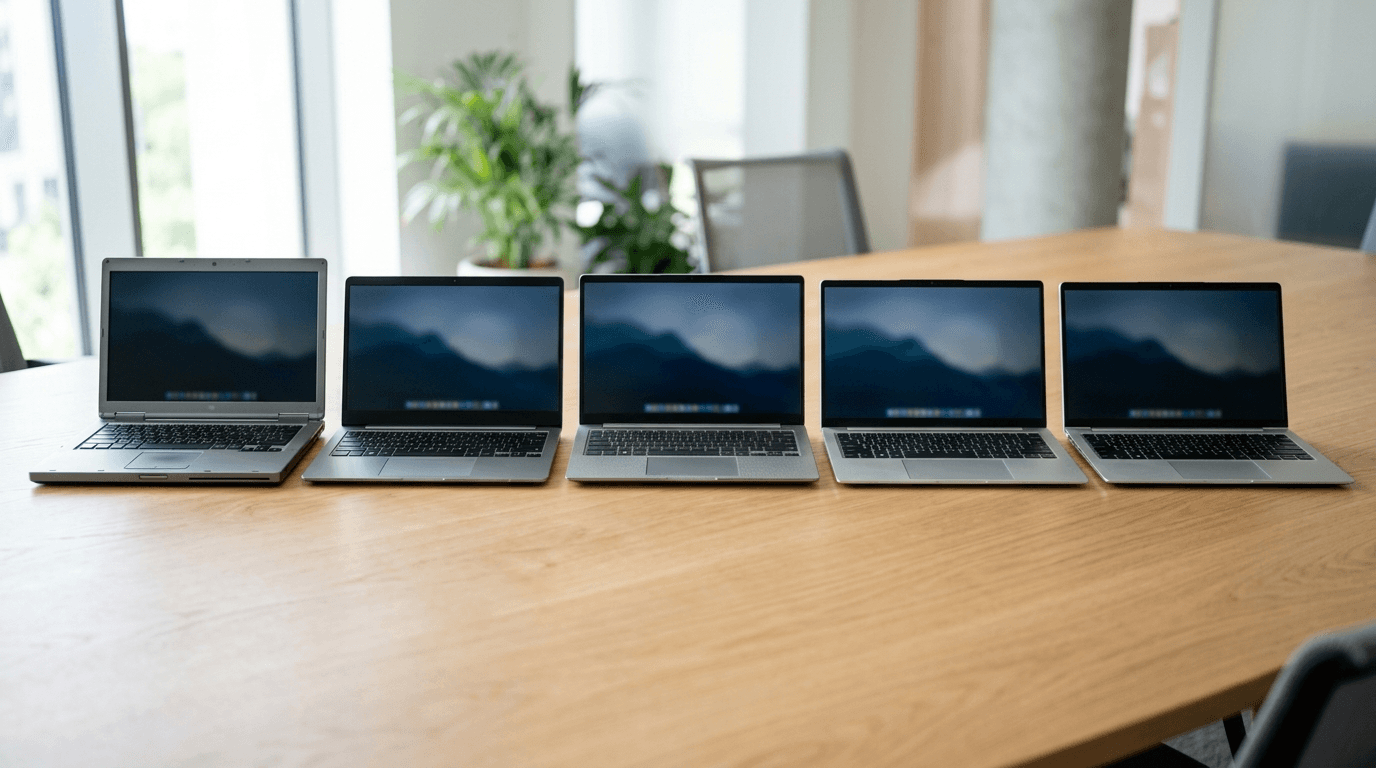
Most small businesses should plan to replace desktops and laptops every three to five years, and in practice the four-year mark is where the numbers start favoring a new machine over an old one. Holding onto hardware past that point feels like the frugal choice, but the repair time, the slowdowns, and the security gaps usually cost more than the replacement would have. This is a guide to setting a sensible refresh cycle for your business without overspending or getting caught flat-footed.
| Device | Typical replacement cycle |
|---|---|
| Business laptops | Every 3-4 years |
| Desktops | Every 4-5 years |
| Servers | Every 5-7 years |
So what is the right replacement cycle?
Plan on a three-to-five-year life for laptops and desktops, and treat four years as the trigger to start budgeting the replacement. Laptops tend to wear out faster than desktops because they take physical abuse, run hotter, and have batteries that degrade. A machine that still turns on is not the same as a machine that is worth keeping.
The cleaner way to think about it is total cost of ownership, not purchase price. A four-year-old laptop that boots slowly, drops its Wi-Fi, and needs a repair twice a year is quietly draining hours from whoever uses it. Those hours have a price, and it is often higher than a new device spread over three years of use.
Why does four years tend to be the turning point?
Because that is when maintenance costs and lost time overtake the cost of buying new. A Techaisle study of small businesses found that repairing a PC older than four years costs about $427 per machine per year, and each repair event burns roughly 42 hours of productivity. Run that across a handful of aging machines and the total rivals the price of new laptops.
Older hardware also blocks the software you actually need. Newer processors and more memory let people keep more applications open at once without the machine grinding, and modern security tools assume a certain baseline of horsepower. An underpowered PC either can't run current protection well or slows to the point that employees start disabling things to get their work done.
What are the signs a computer is ready to be replaced?
You rarely need a lab test. The everyday signals are reliable:
- Boot times that stretch past a couple of minutes
- Fans running constantly
- Storage that is always full
- Batteries that don't hold a charge through a meeting
- Repairs that start clustering
Another big one is the operating system. When a device can't run a supported, patched version of Windows, it has aged out regardless of how it feels day to day.
That last point matters right now. With Windows 10 reaching end of support, a lot of otherwise-functional machines can't meet the hardware requirements for Windows 11 and are running without security updates. Those are replacement candidates today, not next year.
What about servers and other hardware?
Servers run on a longer clock, usually five to seven years, but they carry more risk when they fail because more people depend on them. Network gear like firewalls and switches also ages, and out-of-date network hardware is a genuine security exposure, not just a performance one. The right refresh window depends partly on whether you have moved workloads to the cloud, which changes what you need on-site. A managed IT provider can map this out so replacements are staged rather than happening all at once.
How do you budget for replacements without big surprises?
The mistake most owners make is treating hardware as an emergency purchase. A computer dies, work stops, and someone buys whatever is available that afternoon at retail price. A refresh plan replaces that scramble with a schedule. List every device, note its age, and stagger replacements so you are buying a few machines a year instead of the whole fleet in a panic.
This is also where predictable IT spending helps. If you already work with a provider, hardware lifecycle planning usually folds into the same monthly relationship, and the cost lines up with what you would expect from per-user managed IT pricing. Standardizing on a couple of device models makes support, imaging, and new-hire setup faster too, because everyone is working from the same known configuration.
By Joe Laboy for The NetSys Group, which has delivered managed IT, cybersecurity, and cloud services since 1998. Our engineers hold degrees in electrical and computer engineering and are certified Microsoft and Cisco instructors, serving businesses across NY, NJ, CT, PA, and Southwest Florida.
Frequently asked questions
How often should a business replace laptops specifically?
Every three to four years for most business laptops. They take more physical wear than desktops and their batteries degrade, so they usually reach the point of frequent repairs and slowdowns before a desktop of the same age does. Heavy travelers may need replacing even sooner.
Is it cheaper to repair an old computer or replace it?
Past about four years, replacing is usually cheaper once you count repair costs and lost work time. A single repair can cost a few hundred dollars and dozens of hours. When repairs start recurring on the same machine, the total quickly approaches the price of a new device.
Can we just upgrade the RAM or add an SSD instead?
Sometimes, for a year or two of extra life on a machine that is otherwise sound. Adding memory or a solid-state drive is a reasonable stopgap. It does not help if the processor is too old for current software or if the device can't run a supported operating system.
What should we do with old computers we retire?
Wipe them securely before they leave your control. Retired machines often still hold company data and saved logins, so a standard delete is not enough. Use certified data destruction and, ideally, keep a record of what was wiped. A managed IT provider can handle secure disposal as part of the refresh.
If your machines are getting slow and you are not sure which ones are worth keeping, we can help. Contact The NetSys Group for a complimentary assessment of your hardware and a staged replacement plan that fits your budget.


Discuss managed it services for your business.
Tell us about your current systems, the result you need and your timeline. We will discuss the work, responsibilities and pricing before you decide on an engagement.