
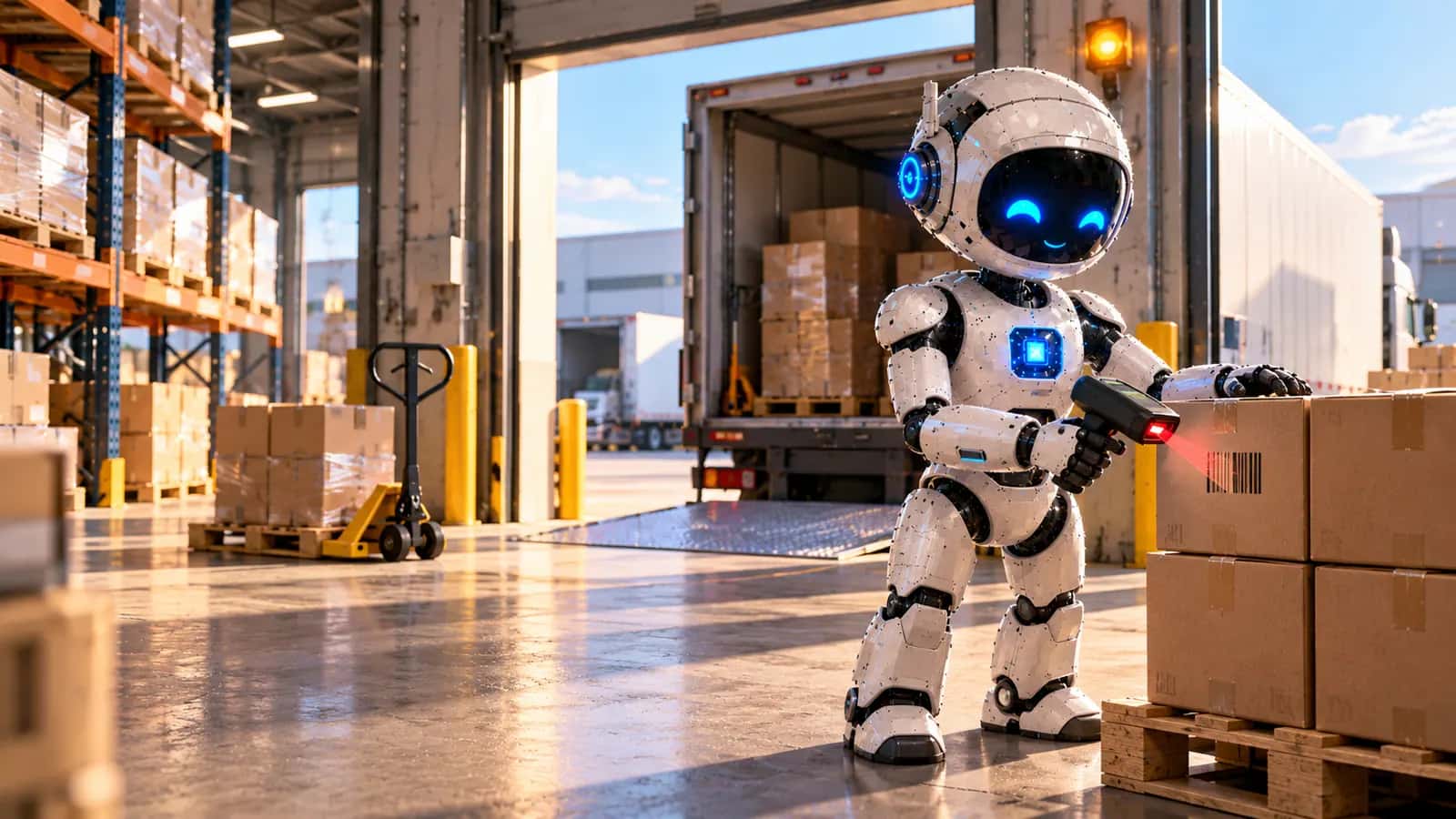
Logistics IT Support in the Bronx, NY
The Hunts Point Food Distribution Center handles a large share of the food New York City eats, and the warehouses around it in Port Morris and Mott Haven work late shifts. NetSys keeps the technology behind that work running: Wi-Fi under the racking, scanners and label printers, the warehouse system and EDI feeds, and the office PCs that pay suppliers.
The short answer
NetSys provides IT support for logistics, wholesale and food distribution companies in the Bronx, from tenants of the Hunts Point Food Distribution Center to last-mile warehouses in Port Morris and Mott Haven. We manage warehouse Wi-Fi and handheld scanners, the network between the dock and the office, connections to the warehouse management system and EDI partners, cold-chain monitoring networks, email security and tested backups. Engineers from our Brooklyn office come on site, and Hunts Point is about 35 minutes from Park Slope by car without traffic. Monitoring and emergency service run 24/7, and pricing is per user per month after an assessment.
Work we have done for logistics clients
- Logistics and warehousing
Refrigerated food storage operator
Backup and disaster recovery planning for 4 servers, recovery testing, and redundant internet connections across two facilities.
- Importers and distributors
Large regional beverage distribution company
Warehousing and inventory management for 50 replacement devices, workstation deployment, and warehouse Wi-Fi support across four facilities.
Hardware Lifecycle ManagementIT for Importers and Distributors
Client names are withheld. These examples were chosen for the work involved, not for where the client is, so none is presented as a The Bronx client.
What changes for a Bronx distributor
The Hunts Point Food Distribution Center covers 329 acres and holds about 150 wholesalers, distributors and processors, according to the State Comptroller's November 2023 snapshot. Its produce market, the Hunts Point Cooperative meat market and the New Fulton Fish Market are each the largest of their kind in the country, and a 2016 study found the center moves about 4.5 billion pounds of food a year, including roughly 25 percent of the city's produce, 35 percent of its meat and 45 percent of its fish. Independent restaurants make up nearly half of its customers, which means thousands of small orders, overnight picking and trucks queued before dawn. A scanner network that drops at 3 a.m. costs real money here. So does change. In December 2025 the city announced $405 million in funding to rebuild the produce market as an all-electric intermodal facility, with construction expected to begin in late 2026, and any merchant moving into the new buildings will need cabling, a fresh Wi-Fi survey and a circuit cutover planned around the trading day. Beyond the peninsula, Port Morris and the Harlem River Yard hold grocery delivery and last-mile warehouses that run on the same tight overnight clock.
On-site and remote support for Bronx warehouses
Most of the support a distributor needs happens remotely. Office staff call the help desk for email, accounts and printers; warehouse user accounts are added and removed the day people start or leave; NinjaOne watches servers and PCs, and the Meraki or Fortinet dashboard shows every access point and switch, so a failed unit is usually spotted before the shift lead calls. Engineers come on site for the physical work: placing access points after racking is moved, running cable to dock doors and freezer entrances, replacing a switch that died in a hot closet, and setting up label printers and scanner cradles. The drive from our Park Slope office to Hunts Point is short, and visits are booked around receiving windows so we are not in the way when trucks are.
Scanners, the warehouse system and the network between them
In a distribution building the warehouse management system is only as good as the radio network under it. Handheld scanners roam between access points as pickers move down the aisles, and steel racking, stacked product and freezer walls all bend or block the signal, so a survey done on an empty floor is wrong the day the racks fill. We survey against the building as it stands, tune roaming for the scanners, and put the scanners, refrigeration and temperature sensors, cameras and office PCs on separate network segments. EDI links to customers and carriers are monitored so a failed advance ship notice or purchase order feed is caught before a retailer issues a chargeback. The warehouse system's vendor keeps responsibility for the application; we handle its servers or cloud access, user accounts, devices and the circuits it depends on.
Flood risk, power and payment fraud on the peninsula
Hurricane Sandy reached Hunts Point at low tide in 2012 and largely spared it, though surge still crossed into the New Fulton Fish Market parking lot, and City Limits reported in 2022 that nearly a third of the Food Distribution Center's land sits in the current 100-year floodplain. The Bronx was also in the federal disaster declaration for the remnants of Ida in 2021. For IT that means no single point of failure at ground level: servers in the cloud where the software allows, Datto or Veeam backups copied off the peninsula and restored in a test, UPS units in the closets and cellular failover for the circuit. The other recurring loss is quieter: a supplier email with new bank details. A callback rule, multifactor sign-in on the accounts payable mailbox and alerts on new forwarding rules stop most of it.
Everything else about how we serve the area, including coverage, how support is delivered and the honest answer about where our office is, lives on our location page for The Bronx, NY.
Rules that shape IT for Bronx logistics and food companies
FDA food traceability rule (21 CFR Part 1, Subpart S)
Firms that manufacture, process, pack or hold foods on FDA's Food Traceability List must keep key data elements for each critical tracking event and give FDA the records within 24 hours of a request, plus an electronic sortable spreadsheet when FDA needs one during an outbreak or recall. The original compliance date was January 20, 2026; FDA has proposed July 20, 2028, and Congress directed FDA not to enforce the rule before then. Those records need to be searchable, backed up and recoverable.
CTPAT Minimum Security Criteria (cybersecurity)
CTPAT is CBP's voluntary supply chain security program, and importers that join must meet its cybersecurity criteria. The October 2021 importer criteria call for written cybersecurity policies covering each criterion, malware and firewall protection kept current, regular testing of IT security, individually assigned accounts, secure remote access such as a VPN, and data backups weekly or as appropriate, with sensitive data encrypted. Policies must be reviewed at least once a year. We map those items to the controls we run and keep the evidence ready for validation.
NY SHIELD Act (GBL 899-aa and 899-bb)
Driver and warehouse staff files carry Social Security numbers, license numbers and bank details, which makes most distributors holders of private information under New York law. Section 899-bb requires reasonable administrative, technical and physical safeguards. Section 899-aa sets a 30-day clock, starting at discovery, for telling affected people about a breach, and also requires notices to the Department of State, the State Police and the Attorney General. This is general information, not legal advice.
This is general information, not legal advice. Confirm your obligations with counsel.
Logistics Companies in The Bronx: FAQs
Who provides IT support for logistics companies in the Bronx?
NetSys does, from its one office in Brooklyn, with engineers on site across the Bronx and remote support behind them. We work with wholesalers and food distributors at Hunts Point, delivery and last-mile warehouses in Port Morris and Mott Haven, and trucking and freight offices along the Bruckner and Major Deegan corridors. We can run all of IT or work alongside the person in your office who looks after the warehouse system. NetSys has been in business since 1998, and agreements run month to month.
What does IT support cost for a logistics company in the Bronx?
Managed IT is priced per user per month after an assessment, and in a warehouse the user count is only part of it. Shared scanners, label printers, dock tablets and temperature sensors add devices without adding people, and a building that needs a new Wi-Fi survey or cabling to the dock adds a one-time project, quoted after scoping. Compliance work for CTPAT or food traceability records is scoped separately. We publish no price list, and there is no long-term contract.
How do you help Bronx importers meet CTPAT cybersecurity criteria?
We start with CBP's importer criteria and map each one to a control and a piece of evidence. We help you write the policy document, then show where each requirement is met: ThreatDown and Defender for malware protection, the managed firewall for intrusion, Rapid7 InsightVM scans for regular testing, Entra ID for individually assigned accounts with multifactor sign-in, and Datto or Veeam for encrypted backups. We review the set with you every year, or sooner after an incident, as the criteria require.
Do you support the warehouse management system we already use?
We support everything around it, and we work directly with its vendor. The vendor stays responsible for the application itself; NetSys handles the servers or cloud tenancy it runs on, user accounts and permissions, the scanners and PCs that use it, the network and circuits it depends on, and backups of its database where it runs on premises. When something breaks we open the vendor ticket, give them the logs and a controlled remote session, and stay on until scanning works again.
Do you provide on-site IT support at Bronx warehouses?
Yes. The Bronx is inside our on-site area, so engineers from the Brooklyn office come to your building for access point placement, cabling to dock doors and cold rooms, switch and firewall replacement, label printer setup and moves. Remote work comes first for anything that can be fixed over the network, because a scanner profile or a locked account is quicker to fix that way. We schedule visits around your receiving and shipping windows and the building's rules, and we do not promise a fixed arrival time.
How do you keep scanners working in coolers and freezers?
Cold rooms are hard on radios and batteries. Insulated panels and dense frozen product absorb signal, so access points often have to go inside the room or at its doorway rather than in the aisle outside, in enclosures rated for the temperature. Batteries drain faster in the cold, so we set devices to report battery health and plan a spare rotation with your shift leads. Scanner settings are managed centrally, so a replacement unit is ready to scan as soon as it is charged.
Services behind this work
Related pages
Logistics Companies elsewhere: Logistics IT Support in Staten Island, NY · Logistics IT Support in Brooklyn, NY · Logistics IT Support in Queens, NY · Logistics IT Support on Long Island · Logistics IT Support in Hicksville, NY · Logistics IT Support in Kearny, NJ · Logistics IT Support in Newark, NJ · Logistics IT Support in Elizabeth, NJ
Everything NetSys delivers in The Bronx, NY.
Scope IT support for your The Bronx team.
Share the applications, deadlines and security and compliance requirements that matter to your business. We will discuss support, security and project responsibilities before agreeing a scope.