
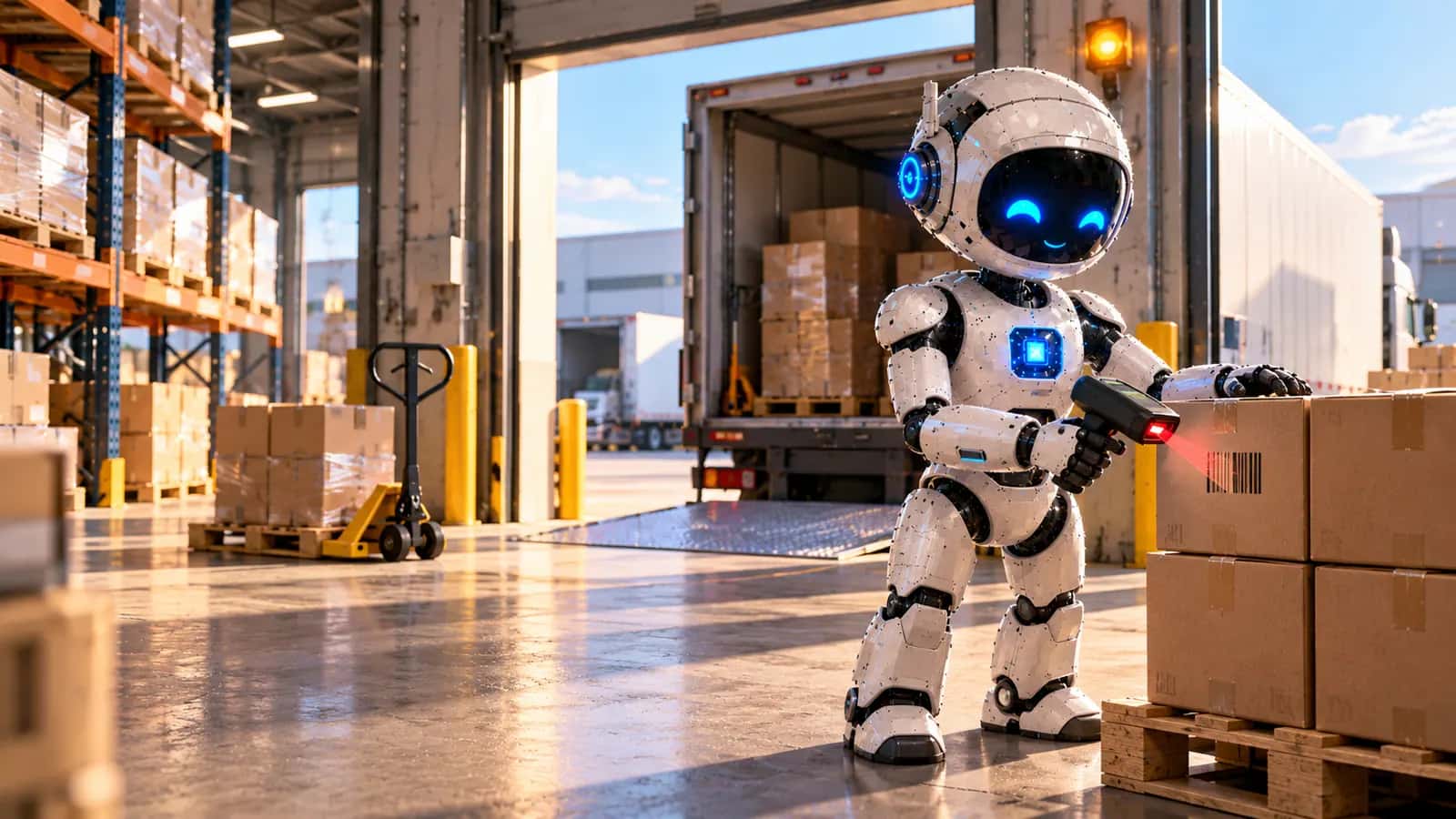
Logistics IT Support on Long Island
Freight comes onto Long Island over the bridges from New York City, by rail on the New York and Atlantic, or by ferry across the Sound, and the last miles run by truck on roads where the parkways are closed to commercial vehicles. The warehouses, distributors and freight firms that make it work depend on scanners, label printers, EDI links and Wi-Fi. NetSys keeps those systems running.
The short answer
NetSys provides logistics IT support on Long Island for warehouses, third-party logistics providers, distributors and freight forwarders: Wi-Fi designed for racked aisles and loading docks, firewalls and separate networks for scanners and printers, monitoring of EDI and carrier connections, Microsoft 365, endpoint protection and tested backups. Engineers from our Brooklyn office work on site across Nassau and western Suffolk, the Hauppauge Industrial Park included; sites near Patchogue and Port Jefferson get a confirmed drive time, and East End yards are supported remotely. Monitoring and emergency service run 24/7; the help desk is staffed seven days a week from 4 a.m. to 11 p.m. Eastern time.
Work we have done for logistics clients
- Importers and distributors
Large regional beverage distribution company
Warehousing and inventory management for 50 replacement devices, workstation deployment, and warehouse Wi-Fi support across four facilities.
Hardware Lifecycle ManagementIT for Importers and Distributors
- Logistics and warehousing
Refrigerated food storage operator
Backup and disaster recovery planning for 4 servers, recovery testing, and redundant internet connections across two facilities.
Client names are withheld. These examples were chosen for the work involved, not for where the client is, so none is presented as a Long Island client.
What changes for a Long Island warehouse or freight firm
Distribution on Long Island concentrates in a few districts. The Hauppauge Industrial Park, which a 2017 economic study put at about 1,350 businesses and 55,000 employees, mixes warehousing with manufacturing along Motor Parkway, Oser Avenue and the streets between. The Route 110 corridor through Farmingdale and Melville, where dental and medical supplier Henry Schein has its head office, and the industrial areas of Bethpage, Hicksville and Westbury hold distributors that serve stores, restaurants and medical offices across both counties. Rail matters more than it did fifteen years ago: the Brookhaven Rail Terminal in Yaphank, opened in September 2011, receives lumber, flour, building materials and biodiesel by the carload, delivered over the LIRR Main Line by the New York and Atlantic Railway. Most of the rest comes in by truck, and because the Northern and Southern State Parkways bar commercial vehicles, routes funnel onto the Long Island Expressway, Sunrise Highway and local roads that clog at rush hour. That puts pressure on IT: dispatch and routing tools that must work from the cab, a warehouse management system that cannot go down mid-shift, and customer EDI connections that fail quietly at 2 a.m. unless something is watching them.
Support that matches shifts, docks and yards
The help desk opens at 4 a.m. Eastern, which suits a morning shift that starts loading before dawn, and stays staffed until 11 p.m. seven days a week; monitoring and emergency service cover the hours in between. Most problems are fixed remotely: a handheld that will not connect, a label printer feeding blank labels, a dispatcher locked out of the routing system, a customer portal that rejects a password. For physical work, engineers drive out from Park Slope, about 45 minutes to an hour to Bethpage or Westbury and longer to Hauppauge, to mount access points over aisles, run cable to a new dock door, replace a failed switch, or set up rugged tablets and printers on a pick line. Severe problems, such as a site with no internet or a suspected ransomware infection, go straight to your dedicated engineer.
Wi-Fi, scanners and EDI inside the building
Warehouse Wi-Fi fails for physical reasons: steel racking, dense stock that absorbs signal, high ceilings and forklifts that move the problem around. We start with an on-site wireless survey, place Cisco Meraki access points for the aisles and docks rather than the office, and tune roaming so a handheld does not drop mid-scan. Scanners, printers, cameras, time clocks and driver kiosks each get their own network segment, so a guest phone or an infected office PC cannot reach them. The firewall, Meraki or Fortinet, carries two internet paths, typically a fiber or cable circuit from Optimum Business, Verizon Fios or Lightpath, depending on what reaches your address, plus cellular. EDI and file-transfer jobs to retailers and carriers are monitored, so a failed overnight transmission raises an alert before a customer's chargeback does.
Storms, outages and ransomware on the dock
A Long Island warehouse has to plan for days without utility power. Tropical Storm Isaias left about 645,000 customers without electricity in August 2020, and LIPA's timeline puts full restoration at eight days; Sandy pushed seawater into South Shore buildings in 2012. We size battery backup for the network core and any on-site server, add cellular failover, and prefer a cloud warehouse system where the software allows, so pickers can keep working from a generator and a hotspot. Ransomware is the faster threat: Suffolk County's 2022 attack, which kept the county website offline for five months, began with an unpatched flaw on an internet-facing system. Freight firms also see invoice and payment-diversion fraud. Immutable backups, patched firewalls, multifactor sign-in on every portal and a callback rule for changed bank details cover most of it.
Everything else about how we serve the area, including coverage, how support is delivered and the honest answer about where our office is, lives on our page for IT services on Long Island.
Compliance rules for Long Island logistics firms
CTPAT Minimum Security Criteria, cybersecurity section
CTPAT is a voluntary CBP program, but members must meet its Minimum Security Criteria, and since the 2019 revision those include cybersecurity. Members keep written cybersecurity policies, with the NIST Cybersecurity Framework suggested as a model, run firewalls and malware protection that stay updated, assign individual accounts with multifactor authentication preferred, detect unauthorized access, back up data at least weekly, encrypt sensitive data and review the policies at least once a year. We map each criterion to a running control and a record.
NY SHIELD Act safeguards (GBL 899-bb)
Driver files, payroll and customer accounts hold private information such as driver's license and Social Security numbers, so the SHIELD Act's safeguards duty applies. The law expects administrative, technical and physical safeguards; a business with fewer than 50 employees, under $3 million in revenue or under $5 million in assets may size them to its operations. In practice that means access controls, encryption on laptops, vendor oversight and secure disposal of old scanners and drives.
Breach notice under GBL 899-aa
If private information is breached, affected New York residents must be notified within 30 days of discovery. The Attorney General, the Department of State and the Division of State Police must also be told, with the notice template and the approximate number of people affected, and the consumer reporting agencies as well when more than 5,000 New Yorkers are notified at once. Residents of other states on your payroll bring their own state laws. This is general information, not legal advice.
This is general information, not legal advice. Confirm your obligations with counsel.
Logistics Companies in Long Island: FAQs
Who provides logistics IT support on Long Island?
NetSys does. Warehouses and yards in Nassau and western Suffolk get engineers on site from our Brooklyn office, and East End sites are supported remotely. We cover the office and the floor together: Microsoft 365, laptops and rugged devices, warehouse Wi-Fi, firewalls, label printing, monitoring of EDI and carrier connections, security and backups. Your warehouse, transportation and accounting software vendors keep application support, and we coordinate with them when a problem crosses over. There is no long-term contract; the agreement runs month to month.
What does IT support cost for a logistics company on Long Island?
We price it per user per month after an assessment, and a warehouse adds inputs an office does not have: rugged handhelds and printers, access points across the building, the number of sites and circuits, and how many integrations need watching. Shared floor devices are counted differently from named users. Wireless surveys, new dock wiring and warehouse network rebuilds are quoted as projects after scoping, so the recurring fee covers support, monitoring, security and backups.
How do you help Long Island logistics firms meet CTPAT security criteria?
We go through the cybersecurity section of the Minimum Security Criteria for your business type, whether importer, highway carrier or consolidator, and match each item to something running: written policies, Fortinet or Meraki firewalls on current firmware, ThreatDown on every endpoint, named accounts with multifactor sign-in, Datto or Veeam backups at least weekly, encryption and annual policy reviews. We keep the evidence your CTPAT supply chain security specialist will ask to see at validation.
Do you support our warehouse management system and EDI connections?
Yes, around the application. We keep the servers or cloud connections, handhelds, printers and network it depends on healthy, manage user access, and monitor the EDI, file-transfer and carrier links so a failed transmission is caught early. Configuration and bugs inside the warehouse or transportation software stay with its vendor, and we open and chase those tickets. When you change platforms, we plan the cutover around your shipping calendar instead of a quiet week that never comes.
Can you fix Wi-Fi dead spots in a racked warehouse?
Usually, with a survey and the right placement. We walk the building with survey equipment, measure signal at the height scanners are actually used, and design for the racks, stock and ceiling you have. The fix is often more access points mounted over aisles with directional antennas, channel and power tuning, and roaming settings matched to your handhelds. We test with your own devices on a live pick path before calling it done.
What happens if the warehouse loses internet during a shift?
With failover in place, the firewall moves traffic to a cellular or second wired circuit within moments and most users never notice. Without it, cloud systems stop, so we design that path first. We also keep a short downtime procedure at each site: how to keep picking and labeling from cached data or printed lists, who calls the carrier, and when to move shipping labels to a backup workstation. Our round-the-clock monitoring alerts us when a circuit drops.
Services behind this work
Related pages
Other industries in Long Island: IT Support for Law Firms on Long Island · IT Support for Medical Practices on Long Island · IT Support for Dental Practices on Long Island · IT Support for Accounting Firms on Long Island · IT Support for Construction Companies on Long Island · IT Support for Architecture and Engineering Firms on Long Island · IT Support for Financial Services Firms on Long Island · Manufacturing IT Support on Long Island · Medical Office IT Support on Long Island · IT Support for Professional Services Firms on Long Island · Urgent Care IT Support on Long Island · Wealth Management IT Support on Long Island
Logistics Companies elsewhere: Logistics IT Support in the Bronx, NY · Logistics IT Support in Staten Island, NY · Logistics IT Support in Brooklyn, NY · Logistics IT Support in Queens, NY · Logistics IT Support in Hicksville, NY · Logistics IT Support in Kearny, NJ · Logistics IT Support in Newark, NJ · Logistics IT Support in Elizabeth, NJ
Everything NetSys delivers in Long Island, NY.
Scope IT support for your Long Island team.
Share the applications, deadlines and security and compliance requirements that matter to your business. We will discuss support, security and project responsibilities before agreeing a scope.