
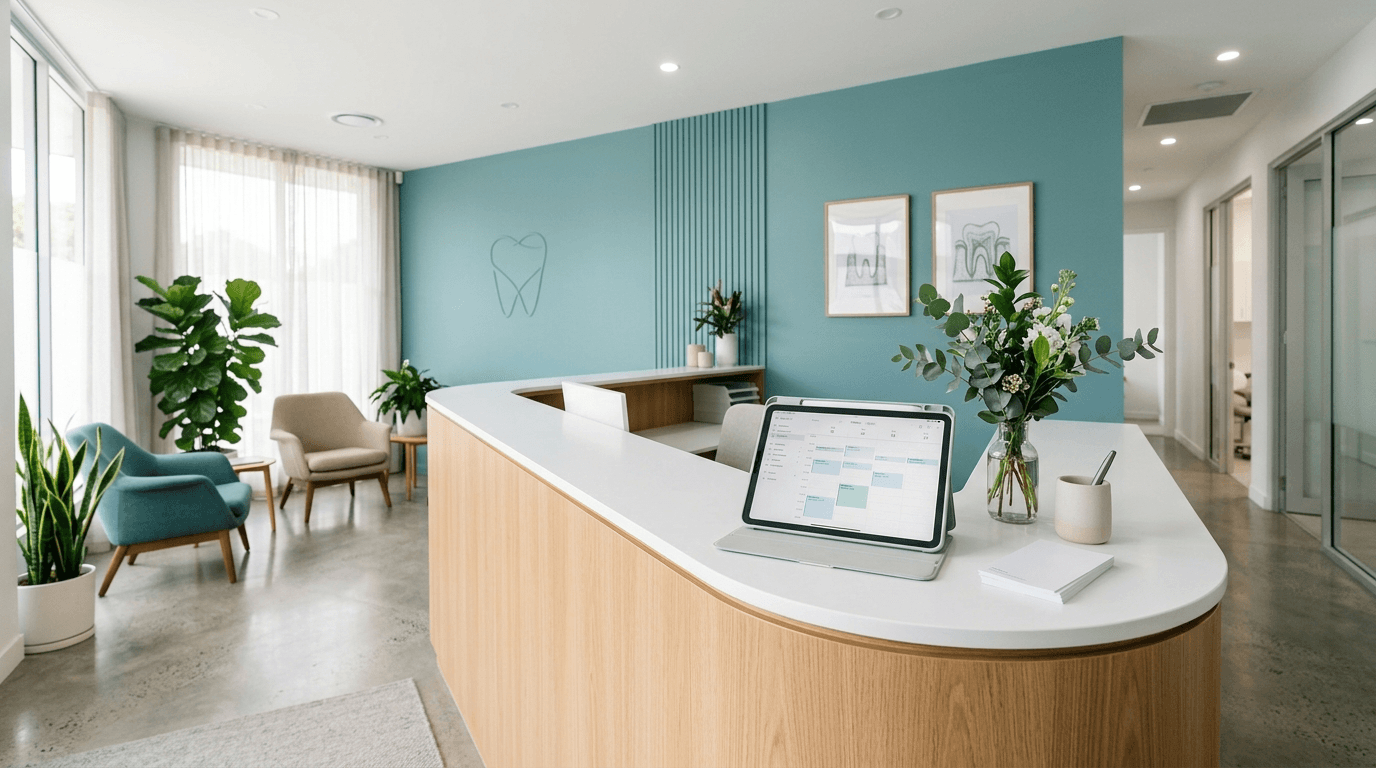
AI automation helps a dental practice fill its schedule, cut no-shows, and take routine front-desk work off your team, without replacing the people patients actually want to talk to. The practical wins are in scheduling, recall reminders, insurance follow-up, and after-hours phone coverage. This guide walks through where AI earns its place in a dental office in 2026, where it does not belong, and how to start without disrupting the practice.
By Jamie Baum, The NetSys Group. The NetSys Group has delivered managed IT, cybersecurity, and cloud services since 1998. Our engineers hold degrees in electrical and computer engineering and are certified Microsoft and Cisco instructors, serving businesses across NY, NJ, CT, PA, and Southwest Florida.
Where does AI actually help a dental practice?
The best place to start is the schedule, because that is where lost time turns directly into lost revenue. The industry average no-show rate has improved to around 4% in recent data, though many practices still run as high as 30%, with each missed appointment costing $200 to $400 in production. A practice losing one slot a day can give up $20,000 to $70,000 a year. Since a large share of no-shows come down to simple forgetfulness, automated, well-timed reminders and easy rescheduling recover real money.
Beyond reminders, the front-desk tasks that respond well to automation include:
- Recall and reactivation. AI can work your list of overdue hygiene patients and lapsed accounts, sending personalized nudges and offering open times instead of leaving those chairs empty.
- After-hours and overflow calls. A voice assistant can answer, book routine appointments, and take messages when the front desk is slammed or closed, so you stop losing new patients to voicemail.
- Insurance and intake paperwork. Automation can send forms ahead of the visit, verify coverage in the background, and flag anything that needs a human to review.
- Review requests. A quick, automatic ask after a good visit steadily builds the online reputation that brings in the next patient.
What should a dental office never automate?
Clinical judgment, treatment recommendations, and any conversation involving a patient's health concerns stay with your team. AI is a front-office and communications tool here, not a clinician. It should hand off cleanly to a person the moment a patient asks something that needs real expertise or reassurance. The goal is to free your staff for the human moments, not to put a bot between the patient and the care.
Does this create a compliance problem?
It can if you are careless, which is why the plumbing matters as much as the tool. Any AI system that touches appointment details, contact information, or insurance data is handling protected health information, so it needs a signed business associate agreement, encryption, access controls, and a vendor you have vetted. This is the same discipline behind sound dental IT generally, which we cover in our guide to managed IT for medical and dental practices. Bolting an AI tool onto a practice with weak underlying security just gives you a faster way to leak data.
How do you start without disrupting the practice?
Pick one problem and solve it before adding a second. For most offices that is no-shows, so begin with automated reminders and self-serve rescheduling tied to your practice management software. Run it for a few weeks, watch the no-show rate, and only then add recall or after-hours answering. Keeping the scope narrow lets your front desk build trust in the system and keeps you from paying for features you never switch on. If you want a broader view of where automation pays off across a small business, our roundup of where AI automation actually earns its keep is a useful map.
Frequently asked questions
Will AI replace my front desk staff?
No. In practice it removes the repetitive work, the reminder calls, the form-chasing, the after-hours voicemail, so your team can focus on patients in the chair and on the phone. Most practices redeploy people rather than reduce them.
How much does AI automation for a dental practice cost?
Entry-level scheduling and reminder tools often run from tens to a few hundred dollars a month per practice, depending on patient volume and features. The real question is payback: recovering even a couple of no-shows a week usually covers the cost several times over.
Is patient data safe with AI scheduling tools?
It can be, if the vendor signs a business associate agreement, encrypts data in transit and at rest, and limits who can access it. Treat any tool that handles appointments or insurance as handling protected health information and vet it accordingly before you connect it.
Does AI automation work with my practice management software?
Most modern tools integrate with common dental platforms through direct connectors or scheduling links. Confirm the integration before you buy, because a tool that cannot read and write to your actual calendar creates more manual work than it saves.
If you run a dental or medical practice and want the front office to run smoother without opening a security hole, we can help you choose and connect the right tools. Book a complimentary consultation and we will look at your setup together.
Related reading
 AI Automation
AI Appointment Scheduling for Small Business: What It Does
Read Article AI Automation
AI Marketing Automation for Small Business: What Works
Read Article AI Automation
AI Automation for Wholesale Distributors and Importers
Read ArticleAlso on this topic: AI Sales Follow-Up Automation for Small Business
Discuss ai receptionist for dental offices for your business.
Tell us about your current systems, the result you need and your timeline. We will discuss the work, responsibilities and pricing before you decide on an engagement.