
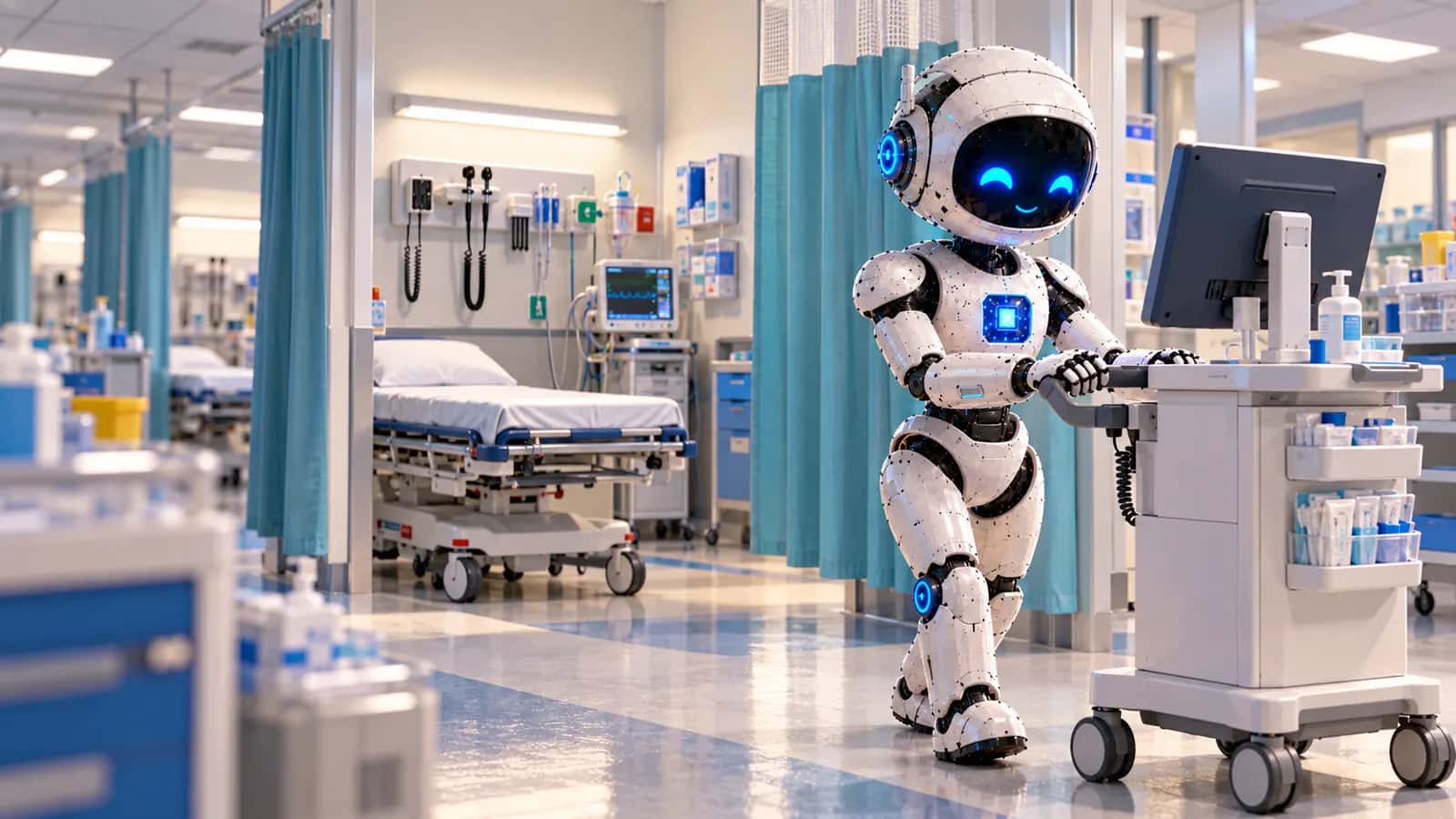
Urgent Care IT Support in Bergen County, NJ
For walk-in and urgent care centers along Route 17, Route 4, Route 46 and the county's main streets, where doors open early, close late and the waiting room fills on weekends. NetSys keeps check-in, the X-ray and lab connections, the card terminals and the internet line running through every open hour, with engineers from Brooklyn on site when hardware fails.
The short answer
NetSys provides IT support for urgent care centers and walk-in clinics in Bergen County, NJ. We keep the systems a center cannot open without working through its posted hours: self-check-in kiosks and tablets, front-desk and provider PCs, the connections to digital X-ray and outside labs, card terminals on their own network segment, and a second internet circuit that takes over when the first fails. Engineers answer the help desk from 4 a.m. to 11 p.m. Eastern, weekends included, long enough to cover early openings and late closings, and monitoring runs 24/7. All of Bergen County is within our on-site area, and engineers drive out for hardware and network failures.
Work we have done for clients in related fields
- Healthcare
Outpatient mental health practice
Support for 32 clinician workstations, secure telehealth access, patient record backups, and phishing protection.
- Healthcare
Three-location urgent care group
IT support for 36 workstations, patient data backups, endpoint protection, and secure networking across all three locations.
- Healthcare
Home healthcare agency
Mobile device protection for 73 phones and tablets, secure email access, and remote removal of company data from lost devices.
Client names are withheld. These examples were chosen for the work involved, not for where the client is, so none is presented as a Bergen County client.
What a Bergen County urgent care center asks of its IT
Bergen County is the most populous county in New Jersey, with about 955,700 residents at the 2020 census, and its walk-in centers tend to sit where the traffic is: along Route 17 and Route 4 through Paramus, Route 46 in the southern towns, and the main streets of Hackensack, Fort Lee, Englewood and Ridgewood. Hospital systems run their own urgent care networks here alongside independent centers, and patients compare them on wait times. That makes IT part of the patient experience. A center lives and dies by throughput in the hours it is open: check-in on a kiosk or tablet, insurance and ID scanned at the desk, a provider charting on a laptop in the exam room, an X-ray taken and read, a strep or flu test logged, a lab order sent out, a copay taken by card, a discharge summary printed. When the December 2019 ransomware attack hit Hackensack Meridian Health, it disrupted the network's urgent care centers along with its hospitals. Weekends, flu season and the evening rush after school and work are when a failure costs the most, and they are also when most IT shops are closed.
Covering every open hour, on site and remotely
A center that opens at 8 a.m. on a Sunday needs IT that is awake before then. The help desk has engineers on from 4 a.m. Eastern, and NinjaOne flags a kiosk that has gone offline or a PC with a failing disk before the morning shift finds it. We keep a pre-configured spare PC and tablet on site, so a dead device is swapped in minutes while the failed one is repaired. Because Bergen County is part of our on-site territory, an engineer reaches Paramus or Hackensack from Park Slope in about an hour or less outside rush hour, for switch failures, closet work, new rooms and printers that need hands. Changes are made outside posted hours, and severe outages go straight to your dedicated engineer.
Check-in kiosks, X-ray and lab connections
Self-check-in kiosks and tablets are locked down with Intune in kiosk mode, so a patient can reach the check-in app and nothing else, and they sit on their own network segment away from clinical PCs. Digital X-ray adds an acquisition workstation and an image transfer to the reading radiologist or image archive; that link needs a stable path, a known-good set of drivers and a vendor contact we can call. Lab orders and results usually move over an interface to a reference lab, often through a VPN, and point-of-care analyzers may feed results into the chart. We monitor those connections, coordinate with the imaging and lab vendors when something stops flowing, and document each interface in IT Glue so the next fix is quick.
When the internet or power fails mid-shift
An urgent care center that loses its internet connection loses check-in, charting in a hosted EHR, e-prescribing, card payments and the lab interface at the same time. We design for that day. The center gets two circuits from different carriers where the building allows it (at a Bergen County address, ask Optimum Business, Verizon Fios and Comcast Business what each can deliver), with a cellular backup on the firewall for the worst case. Network gear and the X-ray workstation sit on battery backup sized to ride through short power cuts. Paper downtime forms and a printed list of the day's booked visits are ready at the desk. FEMA put Bergen in its first group of Ida disaster designations in 2021, so off-site backups are part of the build too.
Everything else about how we serve the area, including coverage, how support is delivered and the honest answer about where our office is, lives on our location page for Bergen County, NJ.
Rules a Bergen County urgent care center works under
HIPAA contingency planning (45 CFR 164.308(a)(7))
Three plans are required: one for backing up patient data, one for restoring it after a disaster, and an emergency mode plan that keeps critical work going while systems are down. Testing those plans and ranking which applications matter most are addressable specifications, which in practice means a walk-in center should have a tested answer for losing its EHR during open hours.
PCI DSS for card payments
Centers that take copays and self-pay charges by card fall under the Payment Card Industry Data Security Standard. Version 4.0.1 is the current version, and its requirements that were future-dated became mandatory on March 31, 2025. Keeping card terminals on their own network segment, away from kiosks, guest Wi-Fi and clinical PCs, keeps the assessment smaller and easier to pass.
New Jersey's breach statute (N.J.S.A. 56:8-163)
The statute covers patient portal usernames and passwords as well as Social Security, driver's license and account numbers. When notice is due, the center files with the State Police before contacting patients, adds the nationwide credit bureaus if a single incident means notifying over 1,000 people, and cannot use a compromised email account to deliver the notice.
Proposed urgent care registration (S2279, 2026 session)
A bill pre-filed for the 2026 session would require urgent care facilities not licensed as ambulatory care facilities to register each year with the Department of Health, send treatment records to a patient's primary care provider within five days on request, and give patients a copy within 24 hours. It is a bill, not law, but records workflows would need to support it. This is general information, not legal advice.
This is general information, not legal advice. Confirm your obligations with counsel.
Urgent Care Centers in Bergen County: FAQs
Who provides IT support for urgent care centers in Bergen County?
Hospital-owned urgent care networks are usually supported by the hospital's IT department, while independent centers and small regional groups typically use a managed IT provider. NetSys supports walk-in and urgent care centers across Bergen County from Brooklyn: check-in kiosks and tablets, workstations, the network and firewalls, the connections to imaging and labs, Microsoft 365, security monitoring and backups. The help desk runs from 4 a.m. to 11 p.m. Eastern each day, which covers a center's longest shifts.
Do you provide on-site IT support for urgent care centers in Bergen County?
Yes. Every Bergen County town is within our on-site radius, and engineers come to the center for failed switches and firewalls, network closets, new exam rooms, printer and scanner replacements and kiosk installs. Remote fixes come first because they are faster during a shift, and pre-configured spares on site keep a dead device from closing a room. Work that could interrupt patients is scheduled outside posted hours. A severe outage, such as the center losing internet or the EHR, goes straight to your dedicated engineer.
How is IT support for an urgent care center in Bergen County priced?
Per user, per month, at a rate we set after assessing the center. The fee depends on staff count, shared devices such as kiosks and exam room PCs, how many sites you run, the number of outside interfaces (imaging, labs, billing), whether a second internet circuit and cellular backup are already in place, and your PCI and HIPAA evidence needs. A new center build is quoted separately, and you are never tied to a long-term contract.
Can you keep our check-in kiosks and tablets working on weekends?
Yes. Kiosks and tablets are managed through Intune in kiosk mode and monitored by NinjaOne, so we see when one drops off the network or stops checking in, often before staff notice. The help desk is staffed on Saturdays and Sundays from 4 a.m. to 11 p.m. Eastern. We keep a configured spare at the center, so a broken kiosk is swapped by staff in minutes and the failed unit is repaired or replaced without pulling anyone from the front desk.
How do you protect patient data at a walk-in clinic that sees a constant stream of strangers?
By assuming every public space is public. Guest Wi-Fi is fully separated from clinical and payment networks. Front-desk screens face away from the waiting room and lock automatically. Kiosks are restricted to the check-in app, and scanned IDs and insurance cards go straight into the chart rather than sitting in a shared folder. Staff sign in with their own accounts and multifactor, providers move between rooms with fast badge or PIN sign-in where the EHR supports it, and ThreatDown watches every device for anything unusual.
Do you work with our X-ray and lab vendors?
Yes, that is part of the job. We keep each vendor's support contact, interface details and remote access method documented in IT Glue, and we give vendor remote access through named accounts that are turned on for a session and off afterward. When an X-ray image does not reach the radiologist or lab results stop arriving, we check the network side first, then take it up with the vendor and keep at it until results are flowing again.
Services behind this work
Related pages
Other industries in Bergen County: Healthcare IT Support in Bergen County, NJ · Medical Practice IT Support in Bergen County, NJ · Dental Office IT Support in Bergen County, NJ
Urgent Care Centers elsewhere: Urgent Care IT Support in New Jersey · Urgent Care IT Support in Westchester County, NY · Urgent Care IT Support in Fairfield County, CT · Urgent Care IT Support in Staten Island, NY · Urgent Care IT Support in New York City · Urgent Care IT Support in Brooklyn, NY · Urgent Care IT Support in Queens, NY · Urgent Care IT Support in Nassau County, NY
Everything NetSys delivers in Bergen County, NJ.
Scope IT support for your Bergen County team.
Share the applications, deadlines and security and compliance requirements that matter to your business. We will discuss support, security and project responsibilities before agreeing a scope.