
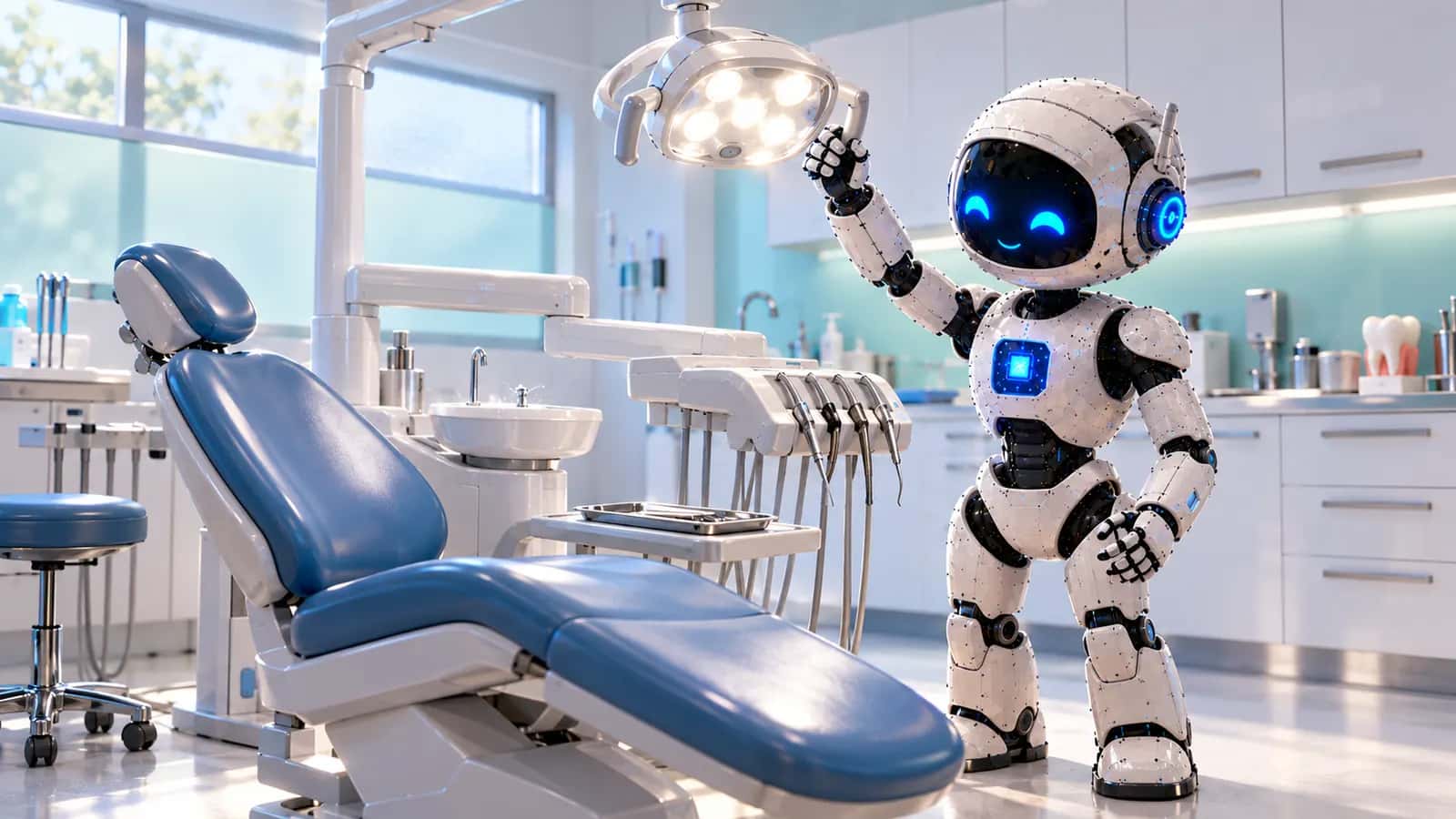
Dental Office IT Support in Suffolk County, NY
For general and specialty dental offices from Huntington and Commack to Smithtown and Stony Brook, where one frozen operatory PC or a sensor that will not capture can back up the whole schedule. NetSys supports the chairside computers, imaging, practice software, front desk and phones, keeps HIPAA safeguards in place, and sends engineers from Brooklyn when an operatory needs hands.
The short answer
NetSys provides dental office IT support in Suffolk County, NY: operatory PCs and intraoral sensors, the imaging workstation and archive, the practice-management server or cloud system, front-desk computers, phones and card terminals, e-prescribing access, HIPAA safeguards and tested backups. Most problems are fixed remotely between patients. Engineers from our Park Slope office handle on-site work in western Suffolk; for practices near Patchogue and Port Jefferson, which lie 50 to 60 miles away, the drive is checked before a visit is promised, and East End offices get remote support. The help desk is staffed 4 a.m. to 11 p.m. Eastern seven days a week, and pricing is per user per month.
Work we have done for dental clients
- Dental practices
Multi-location dental practice
Management of 48 computers across 6 offices, endpoint protection, network segmentation, and centralized backup monitoring.
Client names are withheld. These examples were chosen for the work involved, not for where the client is, so none is presented as a Suffolk County client.
What dental IT looks like across Suffolk County
Many Suffolk dental offices are small independent practices with a handful of operatories, set in plazas along Jericho Turnpike and Middle Country Road, in converted houses in Huntington village and Smithtown, and in medical buildings near the hospitals in Stony Brook, Bay Shore and West Islip. The Stony Brook School of Dental Medicine's Dental Care Center describes itself as the largest provider of oral health care services on Long Island. The industry's biggest supplier is local too: Henry Schein is headquartered in Melville, and its October 2023 cybersecurity incident, disclosed in its annual report, primarily affected its North American and European dental and medical distribution businesses, followed on November 22 by a related disruption to its e-commerce platform. For an office, that was a reminder that supply ordering is part of continuity. Inside the practice, the technology is dense for the headcount: a PC and sensor in every operatory, an intraoral camera, often a panoramic or cone-beam unit with its own workstation, a practice-management system, front-desk check-in, insurance eligibility portals, card terminals, phones and sterilizer logs. A practice is small in staff and large in devices.
On-site and remote support for Suffolk dental offices
Dental IT problems arrive at the worst moment: a sensor that will not capture with a patient in the chair, a front-desk PC that freezes during morning check-in, a server that will not boot after a weekend power cut. The help desk is staffed from 4 a.m. to 11 p.m. Eastern seven days a week, so early openings and Saturday hours are covered, and an engineer connects to the operatory PC remotely while your assistant keeps the patient comfortable. When the fix needs hands, engineers drive out from Park Slope. Offices from Huntington and Babylon east to Smithtown, Lake Grove and Stony Brook fall within our regular visiting range, and we book visits for lunch breaks or after the last patient where we can. Practices near Patchogue, Port Jefferson and Medford are farther, 50 to 60 miles, so we confirm the drive before booking, and East End offices are supported remotely with equipment shipped ready to connect.
Sensors, operatory PCs and the imaging chain
Imaging is where dental IT breaks most often, because it is a chain: the sensor, its USB connection and driver, the imaging software on the operatory PC, the bridge that attaches an image to the patient record, and the archive on the server or in the cloud. A Windows update that replaces a driver, a USB hub that loses power or an archive drive that fills up stops the chain. We document each link for every operatory, hold Windows updates on imaging PCs until the imaging vendor confirms compatibility, and keep spare cables and a known-good driver package on hand. Panoramic and cone-beam units usually have their own acquisition workstation with large storage needs, so we size the archive, back it up with the rest of the practice data and test that an old scan can actually be restored and opened. Operatory PCs belong on Windows 11; any left on Windows 10 stopped getting security updates on October 14, 2025.
Sterilization logs, the front desk and supply ordering
Some of a dental office's most important records are not clinical notes. CDC guidance for dental settings calls for monitoring each sterilizer with a biological indicator at least weekly and for keeping mechanical, chemical and biological monitoring records long enough to meet state and local rules, because those records decide whether an instrument recall is needed. Many offices now keep those logs on a PC or tablet, so we back them up with the practice data. At the front desk, check-in, insurance eligibility portals, card terminals and the phones all have to work at 8 a.m. Card terminals sit on their own network segment, guest Wi-Fi stays on a separate network from the practice, and the practice keeps a written way to order supplies by phone when a distributor's website is down. Staff sign in with individual accounts, not one shared front-desk login, so every chart change and refund has a name on it.
Everything else about how we serve the area, including coverage, how support is delivered and the honest answer about where our office is, lives on our location page for Suffolk County, NY.
Rules Suffolk dental practices work under
HIPAA Security Rule
A dental practice that bills electronically is a HIPAA covered entity and must protect electronic patient information with administrative, physical and technical safeguards under 45 CFR Part 164, Subpart C. The work starts with an accurate and thorough risk analysis covering every system that holds patient data: the practice software, the imaging archive, email, the backups and any laptop that leaves the office. Vendors with access to that data, the IT provider included, sign business associate agreements. HHS proposed Security Rule updates on January 6, 2025; they remain a proposal, not current law.
New York breach notice, General Business Law 899-aa
Section 899-aa lists medical information and health insurance policy or subscriber numbers among the data elements that make a breach reportable in New York. Affected residents are owed notice within 30 days of discovery. A practice that already notifies patients under HIPAA does not send them a duplicate state notice, yet it still informs the Attorney General, the Department of State and the State Police, and it must tell the Attorney General within five business days of reporting a breach to the federal Secretary of Health and Human Services.
Electronic prescribing, Public Health Law 281
Since March 27, 2016, New York practitioners, dentists among them, have had to prescribe both controlled and non-controlled substances electronically, with limited exceptions and waivers of up to one year for economic hardship or technology outside the practitioner's control. Practitioners who meet the federal security requirements for controlled-substance prescribing register with the state Bureau of Narcotic Enforcement. For IT, that means keeping each dentist's prescribing credentials, the authenticator behind them and the prescribing workstation working, and never sharing them.
Prescription Monitoring Program registry
Most prescribers must consult New York's PMP registry before writing a prescription for a Schedule II, III or IV controlled substance, a duty in place since August 27, 2013. Each prescriber and each authorized designee needs an individual Health Commerce System account, so a login passed around the front desk does not meet it. We manage those accounts like any other privileged access: named users, strong sign-in and removal the day someone leaves. This is general information, not legal advice.
This is general information, not legal advice. Confirm your obligations with counsel.
Dental Practices in Suffolk County: FAQs
Who provides IT support for dental practices in Suffolk County?
NetSys provides it from our office in Park Slope, Brooklyn: help desk support for dentists, hygienists and front-desk staff, management of operatory PCs and imaging workstations, the practice-management system's server or cloud access, firewalls and Wi-Fi, HIPAA documentation and tested backups. Engineers come on site across western Suffolk. We have no Suffolk office and do not claim one; the work is done remotely and in person from Brooklyn, on month-to-month agreements.
Do you provide on-site IT support for dental practices in Suffolk County?
Yes. Engineers come to practices across western Suffolk, from Huntington, Commack and Bay Shore to Smithtown, Lake Grove and Stony Brook, for work that needs hands: replacing an operatory PC, reseating a sensor connection, installing a firewall, setting up a new operatory or moving the server during a renovation. Remote support comes first and often fixes the problem between patients. Offices around Patchogue, Port Jefferson and Medford are 50 to 60 miles from our office, so we confirm drive time before any visit, and East End practices are supported remotely.
What does IT support cost for a dental practice in Suffolk County?
Dental IT support is billed per user per month, at a figure set after an assessment; there is no rate card. For a practice the number reflects staff count, the number of operatory PCs and imaging stations, whether the practice software runs on a local server or in the cloud, the size of the imaging archive, and how much HIPAA documentation already exists. Projects such as fitting out new operatories or replacing the server are quoted separately after scoping. Agreements run month to month.
Do you support our practice-management and imaging software?
We support the computers, network, accounts and backups those systems depend on, and we work with your software vendors' support teams rather than around them. When an upgrade is due, we schedule it outside patient hours, confirm the workstation and driver requirements first, take a backup, and give the vendor a logged, time-limited remote session. Clinical configuration and charting questions stay with the vendor; our job is making sure their fixes do not break anything else in the office.
How do you help a Suffolk dental office meet the HIPAA Security Rule?
We start with the risk analysis the rule requires, listing every place patient data lives and the threats to each. Then we close the common gaps: multifactor sign-in for email and remote access, encryption on laptops and the server, individual logins instead of shared operatory accounts, automatic screen locks, audit logging, encrypted and tested backups, and phishing training through KnowBe4. Business associate agreements are tracked for each vendor. You get written evidence of each safeguard, which is what an investigator or insurer asks to see.
What happens if the server or internet fails during patient hours?
The practice keeps seeing patients. Severe outages go straight to your dedicated engineer, and the first steps are remote: restart, fail over or restore. A cellular backup on the firewall keeps cloud practice software, e-prescribing and card terminals online when the cable circuit drops. If a local server fails, a recent image-based backup can run on standby hardware while the server is repaired. We write a one-page downtime procedure for the front desk, so check-in, scheduling and payments continue on paper until systems return.
Services behind this work
Related pages
Other industries in Suffolk County: Manufacturing IT Support in Suffolk County, NY · Urgent Care IT Support in Suffolk County, NY
Dental Practices elsewhere: Dental Office IT Support in Nassau County, NY · IT Support for Dental Practices in New York City · IT Support for Dental Practices on Long Island · IT Support for Dental Practices in Westchester · IT Support for Dental Practices in New Jersey · Dental Office IT Support in Fairfield County, CT · Dental Office IT Support in Bergen County, NJ · Dental Office IT Support in Los Angeles, CA
Everything NetSys delivers in Suffolk County, NY.
Scope IT support for your Suffolk County team.
Share the applications, deadlines and security and compliance requirements that matter to your business. We will discuss support, security and project responsibilities before agreeing a scope.