
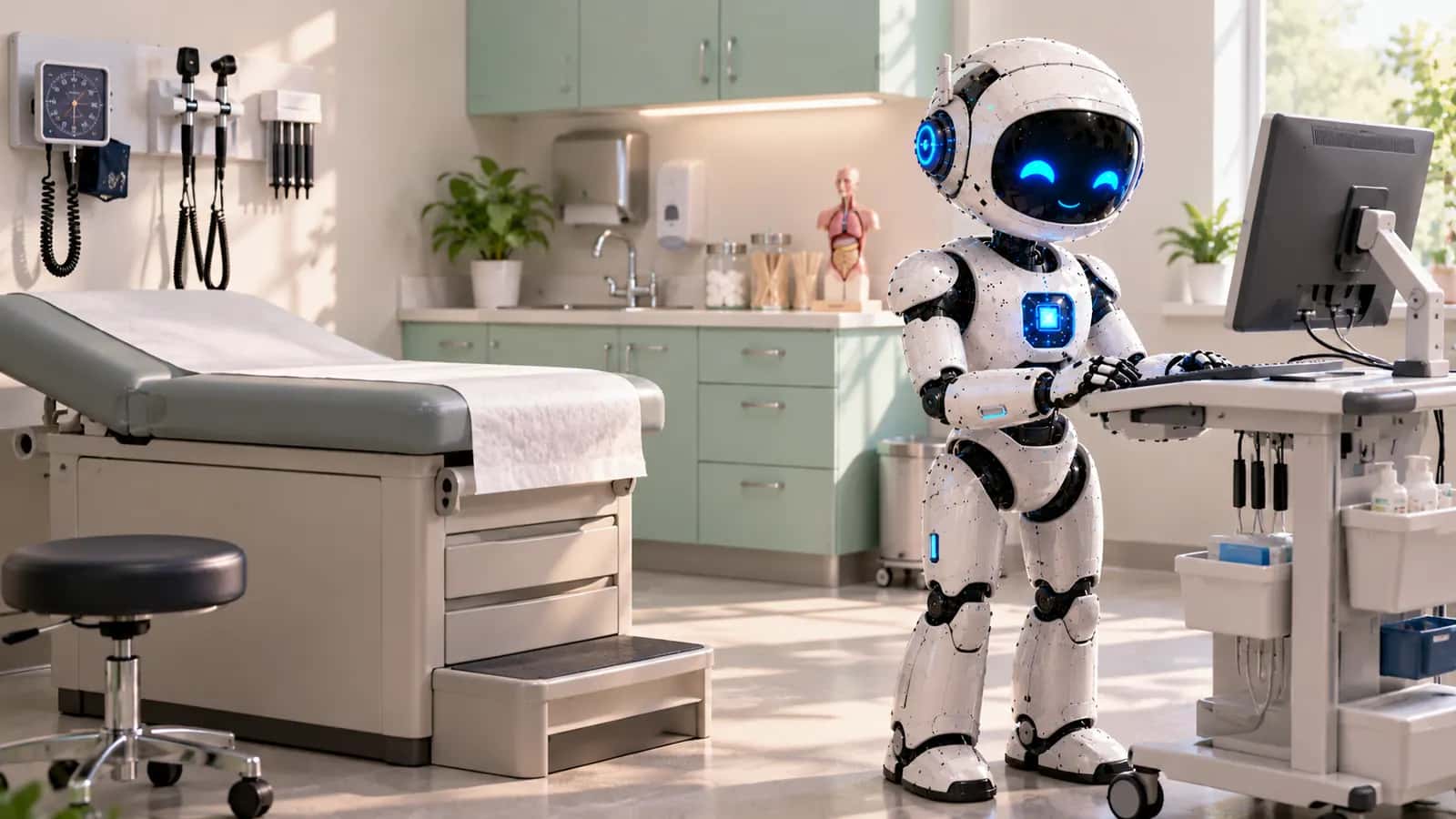
IT Support for Brooklyn Medical Offices and Physician Practices
A Brooklyn physician office runs on a few things that cannot stop: the front-desk computers, the EHR and billing system, e-prescribing, the fax line for referrals and the patient portal. NetSys supports them from our Park Slope office, a short drive from the medical offices that cluster near Brooklyn's hospitals, with HIPAA safeguards built into every step.
The short answer
NetSys provides IT support for doctor's offices and physician practices in Brooklyn: help desk support for the front desk and exam rooms, the EHR and billing workstations, e-prescribing with DEA-compliant two-factor sign-in, secure referral faxing, patient portal email, HIPAA risk analysis support, encrypted devices and tested backups. Support is on-site and remote; engineers come from our Brooklyn office for hardware and network work after remote troubleshooting. We sign a business associate agreement, price per user per month after an assessment and work month to month.
Work we have done for clients in related fields
- Healthcare
Three-location urgent care group
IT support for 36 workstations, patient data backups, endpoint protection, and secure networking across all three locations.
- Healthcare
Home healthcare agency
Mobile device protection for 73 phones and tablets, secure email access, and remote removal of company data from lost devices.
- Healthcare
Outpatient mental health practice
Support for 32 clinician workstations, secure telehealth access, patient record backups, and phishing protection.
Client names are withheld. These examples were chosen for the work involved, not for where the client is, so none is presented as a Brooklyn client.
What changes for a medical office in Brooklyn
Brooklyn's physician offices tend to sit near its hospitals: around Maimonides in Borough Park, NewYork-Presbyterian Brooklyn Methodist in Park Slope, SUNY Downstate and Kings County Hospital in East Flatbush, NYU Langone's Sunset Park hospital and the Brooklyn Hospital Center Downtown, plus ground-floor suites along the borough's long commercial avenues. Those hospital ties drive the daily IT work: referrals, lab orders and results that arrive by fax, by portal or through Healthix, the health information exchange that serves Brooklyn within the statewide SHIN-NY network. The ground is shifting. NYC Health + Hospitals and Maimonides Health are combining, New York's Public Health and Health Planning Council approved the deal in September 2026, and Maimonides plans to move to a new electronic health record, paid for in part with state funding tied to the deal. Independent offices that refer there should expect changes in how orders, results and referral paperwork reach them. Practices here also serve patients in many languages, so reminder messages and portal settings need to handle more than English. Most offices are small: an office manager, a few people at the front desk and no one in IT.
On-site and remote help for the front desk and exam rooms
The front desk is where a medical office feels an IT problem first: a check-in PC that freezes, a scanner that stops reading insurance cards, a label printer that jams, a phone that drops calls. Our help desk takes those remotely, and critical issues get a call back within ten minutes. Monitoring and emergency service run 24/7; the help desk is staffed seven days a week from 4 a.m. to 11 p.m. Eastern time, so a practice that opens at 7 a.m. has support before the first patient arrives. When something needs hands, an engineer drives over from Park Slope, around ten minutes to Downtown and 15 to 20 to Borough Park, to replace a workstation, fix exam-room wiring, swap a failed switch or set up a room for a new provider. Work in clinical areas is scheduled around patient hours.
E-prescribing, referrals and the patient portal
New York has required electronic prescribing for both controlled and non-controlled substances since March 27, 2016, with waivers and exceptions for limited cases. For controlled substances, DEA rules require the prescriber to sign with two of three factors: something they know, a hard token on a separate device, or a biometric. We set up and support those tokens and fingerprint readers, keep the prescribing workstations patched, and make sure a lost phone or token is replaced quickly so a provider is not locked out mid-session. Referrals still move by fax in many offices, so incoming faxes go into secure digital queues instead of an open tray, and outbound referrals travel through the EHR or encrypted email. For the patient portal, we manage the practice's domain and email authentication, so results notices and appointment reminders land in inboxes rather than spam.
HIPAA safeguards sized for a physician office
The HIPAA Security Rule asks every practice for an accurate and thorough risk analysis, and HHS's Office for Civil Rights has made that a priority: its Risk Analysis Initiative, begun in October 2024, has produced more than a dozen enforcement actions, a neurology practice among them. A small office does not need an enterprise program; it needs the basics done and written down. Every person signs in with their own account and multifactor authentication, shared front-desk logins give way to fast user switching, laptops and phones are encrypted through Intune, and workstations lock after a few idle minutes. ThreatDown watches every endpoint, KnowBe4 trains staff to spot phishing, and scanned documents and any on-premises server are backed up and restored on a schedule. We write it all into your risk analysis and policies, and we sign a business associate agreement before touching patient data.
Everything else about how we serve the area, including coverage, how support is delivered and the honest answer about where our office is, lives on our page for IT services in Brooklyn.
Rules for Brooklyn medical offices
HIPAA Security Rule risk analysis (45 CFR 164.308(a)(1))
A covered practice must conduct an accurate and thorough assessment of the potential risks and vulnerabilities to the confidentiality, integrity and availability of the electronic protected health information it holds, then put security measures in place to reduce them. The risk analysis is the document OCR's enforcement initiative focuses on. We update it when the practice adds a location, a provider or a new system, not only once a year. HHS published a proposed update to the Security Rule in January 2025; it is a proposal, not current law.
NY e-prescribing (Public Health Law 281) and DEA two-factor signing (21 CFR 1311.115)
New York practitioners must prescribe controlled and non-controlled substances electronically unless an exception applies. Waivers can be granted for up to a year, and a prescriber who issues 25 or fewer prescriptions in twelve months can file a certification instead. Controlled substance prescriptions also need the DEA's two-factor signing, with a hard token kept separate from the computer or a biometric that meets the DEA's standards. An expired token or certificate stops a provider from prescribing, so we track them like any other critical system.
Information blocking (21st Century Cures Act)
Federal rules bar health care providers from practices likely to interfere with access to, exchange or use of electronic health information, unless an exception applies. Since July 31, 2024, a clinician in Medicare's Merit-based Incentive Payment System whom the HHS Inspector General finds has committed information blocking can receive a zero in the Promoting Interoperability category. For the IT side, that means portal releases, record requests and data exports should work as configured rather than being held up by a broken interface or a disabled feature.
NY SHIELD Act notice (GBL 899-aa)
New York's breach law lists medical information and health insurance information, including policy numbers and claims history, among the data elements that make up private information. A practice that suffers a breach must notify affected residents within 30 days of discovery, and a HIPAA covered entity that reports a breach to HHS must also notify the New York Attorney General within five business days of notifying HHS. Practices that comply with HIPAA are deemed to meet the separate safeguards duty in section 899-bb. This is general information, not legal advice.
This is general information, not legal advice. Confirm your obligations with counsel.
Medical Practices in Brooklyn: FAQs
What does IT support cost for a physician practice in Brooklyn?
It is priced per user per month after an assessment, and we publish no fixed rates. For a physician office the figure moves with the number of staff and providers, front-desk and exam-room workstations, the number of locations, whether the EHR is cloud-hosted or on a local server, and how much HIPAA documentation and training you need. New cabling for an office build-out, a server replacement or a phone system change is quoted as a separate project. Agreements run month to month.
How do you help Brooklyn doctor's offices complete the HIPAA Security Rule risk analysis?
We inventory every system that holds patient data, including the EHR, billing, scanned documents, fax, email, phones and backups, then check each one for access controls, encryption, logging, patching and recovery. Each gap gets a risk rating and a fix, and we carry out the technical fixes ourselves. The result is a written risk analysis and risk management plan in your name, with the evidence filed in IT Glue, which we update when the practice changes. You keep ownership of the document and the decisions in it.
Do you support the EHR and practice-management systems physician offices use?
We support the environment around them rather than acting as the EHR vendor. That means managed workstations that meet the vendor's requirements, reliable internet with failover, scanners, signature pads and label printers that work, Microsoft 365 for staff email, secure remote access for providers charting from home, and backups of any local data. When the fault is inside the application, we open the ticket with the vendor and stay on it until it is fixed, so your office manager does not have to.
Do you provide on-site IT support for medical offices in Brooklyn?
Yes. Our office is in Park Slope, so engineers come to Brooklyn practices for workstation and printer replacements, exam-room network drops, network closet work, new-provider room setups and office moves. Most front-desk problems are fixed remotely within minutes, which is faster than waiting for a visit. Work that interrupts patient care is scheduled before or after clinic hours or between patients, and the dedicated engineer who knows your office handles severe problems such as an EHR outage or ransomware.
How should a small Brooklyn practice handle referral faxes securely?
Move them off the paper tray. A cloud fax service or the EHR's fax integration delivers incoming referrals and records into a queue that only authorized staff can open, with an audit trail of who viewed each one. Outbound faxes go from the EHR or a secured workstation rather than a shared machine near the waiting room. We set up the service, sign the business associate paperwork with the provider, train the front desk and remove the old fax line once the new one has been tested.
How should a Brooklyn practice prepare for changes at the hospitals it refers to?
Start with a list of every connection to the hospital: lab and imaging orders, results delivery, referral forms, admitting and discharge notices, and any hospital portal accounts staff use. When a hospital changes its records system, as Maimonides plans to after joining NYC Health + Hospitals, those connections can change format, address or sign-in method. We track each one, test new interfaces or accounts before the cutover date and update your downtime procedures, so results keep reaching the right chart during the transition.
Services behind this work
Related pages
Other industries in Brooklyn: IT Support for Law Firms in Brooklyn · IT Support for Accounting Firms in Brooklyn · IT Support for Medical Practices in Brooklyn · IT Support for Architecture and Engineering Firms in Brooklyn, NY · Logistics IT Support in Brooklyn, NY · IT Support for Professional Services Firms in Brooklyn, NY · Urgent Care IT Support in Brooklyn, NY
Medical Practices elsewhere: Medical Practice IT Support in White Plains, NY · Medical Office IT Support in Westchester County, NY · Medical Practice IT Support in Staten Island, NY · Medical Office IT Support in New York City · Medical Practice IT Support in Queens, NY · Medical Practice IT Support in Lake Success, NY · Medical Practice IT Support in Great Neck, NY · Medical Practice IT Support in Nassau County, NY
Everything NetSys delivers in Brooklyn, NY.
Scope IT support for your Brooklyn team.
Share the applications, deadlines and security and compliance requirements that matter to your business. We will discuss support, security and project responsibilities before agreeing a scope.