
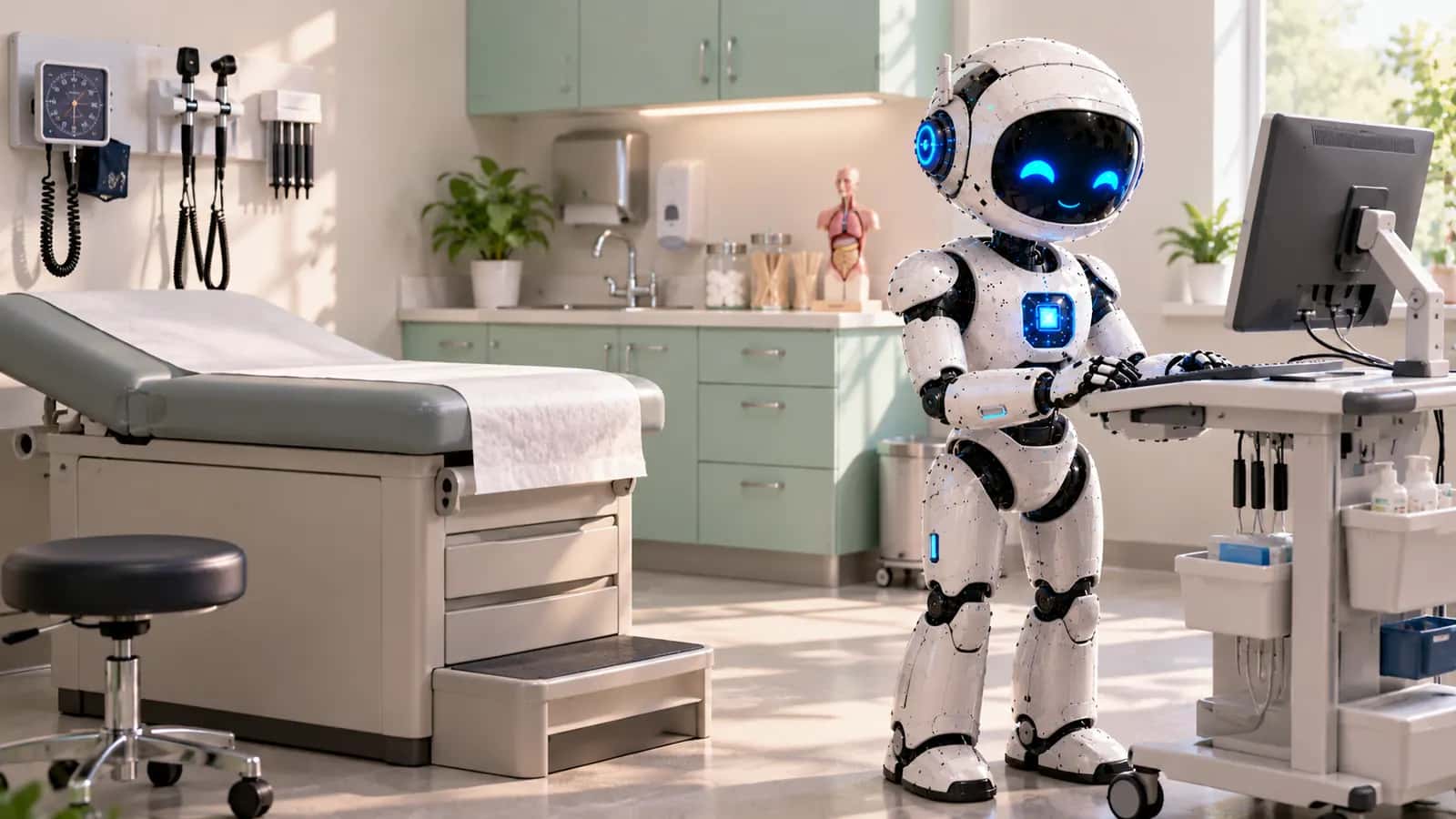
Medical Practice IT Support in Queens, NY
For physician offices in Flushing, Forest Hills, Jamaica, Astoria and Bayside, where the front desk, the exam-room computers and the e-prescribing token all have to work before the first patient walks in. NetSys supports the doctors and staff, secures the records, deals with the vendors, and sends an engineer from Brooklyn when hardware needs hands.
The short answer
NetSys supports medical practices in Queens, NY with a help desk for physicians and front-desk staff, managed workstations and printers, multifactor sign-in that meets the DEA's two-factor rule for prescribing controlled substances, secure fax and referral workflows, patient portal and email protection, and backups of the practice's EHR and billing system. Queens is inside our on-site area: most problems are fixed remotely, and engineers from Park Slope handle hardware and network work in person. Practices pay a per-user monthly fee set after an assessment, on month-to-month terms.
Work we have done for clients in related fields
- Healthcare
Three-location urgent care group
IT support for 36 workstations, patient data backups, endpoint protection, and secure networking across all three locations.
- Healthcare
Home healthcare agency
Mobile device protection for 73 phones and tablets, secure email access, and remote removal of company data from lost devices.
- Healthcare
Outpatient mental health practice
Support for 32 clinician workstations, secure telehealth access, patient record backups, and phishing protection.
Client names are withheld. These examples were chosen for the work involved, not for where the client is, so none is presented as a Queens client.
What a Queens physician office runs on
A typical Queens practice has a front desk doing three jobs at once: checking insurance eligibility, scanning cards and photo IDs, and answering a phone that rings in several languages. Behind it are exam-room PCs shared by doctors, nurses and medical assistants, a label printer for specimens, a fax line that still carries referrals and records requests, and a patient portal that patients increasingly use instead of calling. New York has required electronic prescriptions since March 27, 2016, so every prescriber needs working e-prescribing access, and controlled substances add identity proofing and a second sign-in factor. Most prescribers must also check the state's Prescription Monitoring Program registry before prescribing Schedule II, III or IV drugs, through individual Health Commerce System accounts for each doctor and designee. Pediatric and family offices report vaccines given to patients 18 and under to the Citywide Immunization Registry within 14 days. Each of those steps depends on a sign-in, a browser or an interface that IT has to keep working.
On-site and remote support built around clinic hours
Staff call one help desk, and an engineer usually fixes the problem on the call: a locked account before morning appointments, a printer that dropped off the network, a portal message that will not send, a scanner that stopped feeding. Monitoring and emergency service run 24/7; the help desk is staffed seven days a week from 4 a.m. to 11 p.m. Eastern time, which covers early openings and Saturday sessions. When the fix needs hands, Queens is inside our on-site area: about 40 minutes from Park Slope to Astoria or Long Island City and closer to an hour for Flushing, Jamaica or Bayside. Engineers come out to replace an exam-room PC, rewire a closet, set up a new provider's workstation or move the office, and we schedule that work around patient hours.
The front desk, exam rooms and the record system between them
Shared exam-room computers are where small practices lose control of access. We give every doctor, nurse and assistant an individual sign-in, use fast user switching or tap-to-sign-in where the record system supports it, and set screens to lock when a room empties. Front-desk PCs get the scanners, signature pads and card readers tested after each update. Faxes arrive as encrypted email or into the record system rather than onto a tray anyone can read. The patient portal and practice email sit behind Barracuda filtering, because fake portal notifications and invoice scams are a common phishing lure aimed at practices. The software vendor supports the record system itself; we handle the workstations, network, browsers and sign-in it depends on, and we coordinate with the vendor so staff are not caught in between.
Ransomware, clearinghouse outages and keeping the schedule running
The February 21, 2024 cyberattack on Change Healthcare showed how a practice can be healthy and still unable to bill: claims and payments stalled across the country, and many small offices ran short of cash for weeks. Closer to home, ransomware remains the threat that stops patient care outright. Our baseline for a Queens office is ThreatDown managed detection and response across every laptop and PC, multifactor sign-in on all accounts, immutable backups of anything stored locally, and a printed downtime kit: tomorrow's schedule, a paper intake form and the phone numbers of the vendors and labs. We also keep a cellular failover on the firewall, after checking carrier availability at the address, so a cut cable on the block does not take the portal and e-prescribing down with it.
Everything else about how we serve the area, including coverage, how support is delivered and the honest answer about where our office is, lives on our location page for Queens, NY.
Rules that shape IT in a Queens medical office
HIPAA risk analysis
Section 164.308(a)(1)(ii)(A) of the HIPAA Security Rule requires an accurate and thorough assessment of the risks to the confidentiality, integrity and availability of the practice's electronic patient information. HHS's Office for Civil Rights has made that requirement the focus of its Risk Analysis Initiative, and physician practices have been among the settlements. A current analysis with a remediation plan is the first thing to have ready.
Electronic prescribing and EPCS
New York Public Health Law section 281 requires prescriptions to be transmitted electronically, with limited exceptions, and the mandate has applied since March 27, 2016. For controlled substances, the DEA's rule at 21 CFR 1311.115 requires two-factor authentication to sign each prescription, and a hard token used as a factor must be separate from the computer and meet FIPS 140-2 Level 1. We keep tokens, phones and identity proofing records organized per prescriber.
Prescription Monitoring Program checks
Since August 27, 2013, most prescribers in New York must consult the PMP Registry before prescribing Schedule II, III or IV controlled substances. Practitioners may authorize designees, but each prescriber and designee needs an individual Health Commerce System account. That rules out shared logins at the front desk and makes multifactor sign-in and prompt removal of departing staff part of compliance, not just security.
Citywide Immunization Registry reporting
The New York City Health Code and state Public Health Law section 2168 require providers to report immunizations given to patients 18 and under to the Citywide Immunization Registry within 14 days of administration. Many practices report through the record system's registry interface, so a failed interface is a compliance gap, not just an IT ticket. We monitor that the interface keeps sending after upgrades. This is general information, not legal advice.
This is general information, not legal advice. Confirm your obligations with counsel.
Medical Practices in Queens: FAQs
What does IT support cost for a physician practice in Queens?
The fee is per user per month, worked out in an assessment; we do not post prices because offices differ. A three-doctor office with cloud-hosted records and a handful of exam-room PCs costs less to support than a practice with a local server, an X-ray workstation and a second location. Other factors are the number of shared workstations, how much HIPAA documentation you need and whether we manage the phones. Hardware, licenses and office moves are priced separately, on the same month-to-month terms.
Do you provide on-site IT support for medical offices in Queens?
Yes. The whole borough is inside our on-site area; an engineer drives over from Park Slope for jobs such as replacing an exam-room computer, fixing a closet switch, installing a printer or scanner, or preparing the office for a new physician. We try remote troubleshooting first because it is faster, and most problems end there. Visits are arranged around patient hours, and an office that loses access to its record system or prescribing gets priority handling from its dedicated engineer.
How do you set up e-prescribing of controlled substances securely?
Each prescriber gets an individual account with a second factor that meets the DEA's requirements, either a phone-based authenticator or a hard token, registered through the e-prescribing software's identity proofing process. We keep a record of which device belongs to which prescriber, replace lost tokens quickly, and remove access the day someone leaves. Exam-room computers used for prescribing get automatic screen locks and current browsers, and we test prescribing after every update so a doctor does not discover a broken plug-in mid-visit.
Do you work with our EHR vendor?
Yes. The vendor supports the application; we support everything it runs on and connects through, which means workstations, servers or the cloud tenant, the network, browsers, printers, scanners and sign-in. When something breaks at the boundary, such as a scanner that no longer files into the chart or a lab interface that stopped receiving results, we open the ticket with the vendor, supply the logs and stay on the call until it is fixed. Before any update we check the vendor's supported versions.
How do you help a Queens practice meet the HIPAA risk analysis requirement?
We list every place patient information lives or travels: the record system, the portal, fax, email, phones, backups and any laptop that goes home. For each one we note the threats, the safeguards in place and the gaps, such as shared logins, unencrypted devices or a vendor with permanent remote access, and give each a risk rating. You receive a written analysis with a remediation plan, owners and dates, and we update it every year and whenever a new system or provider is added.
Services behind this work
Related pages
Other industries in Queens: Healthcare IT Support in Queens, NY · Urgent Care IT Support in Queens, NY · Logistics IT Support in Queens, NY
Medical Practices elsewhere: Medical Practice IT Support in White Plains, NY · Medical Office IT Support in Westchester County, NY · Medical Practice IT Support in Staten Island, NY · Medical Office IT Support in New York City · IT Support for Brooklyn Medical Offices and Physician Practices · Medical Practice IT Support in Lake Success, NY · Medical Practice IT Support in Great Neck, NY · Medical Practice IT Support in Nassau County, NY
Everything NetSys delivers in Queens, NY.
Scope IT support for your Queens team.
Share the applications, deadlines and security and compliance requirements that matter to your business. We will discuss support, security and project responsibilities before agreeing a scope.