
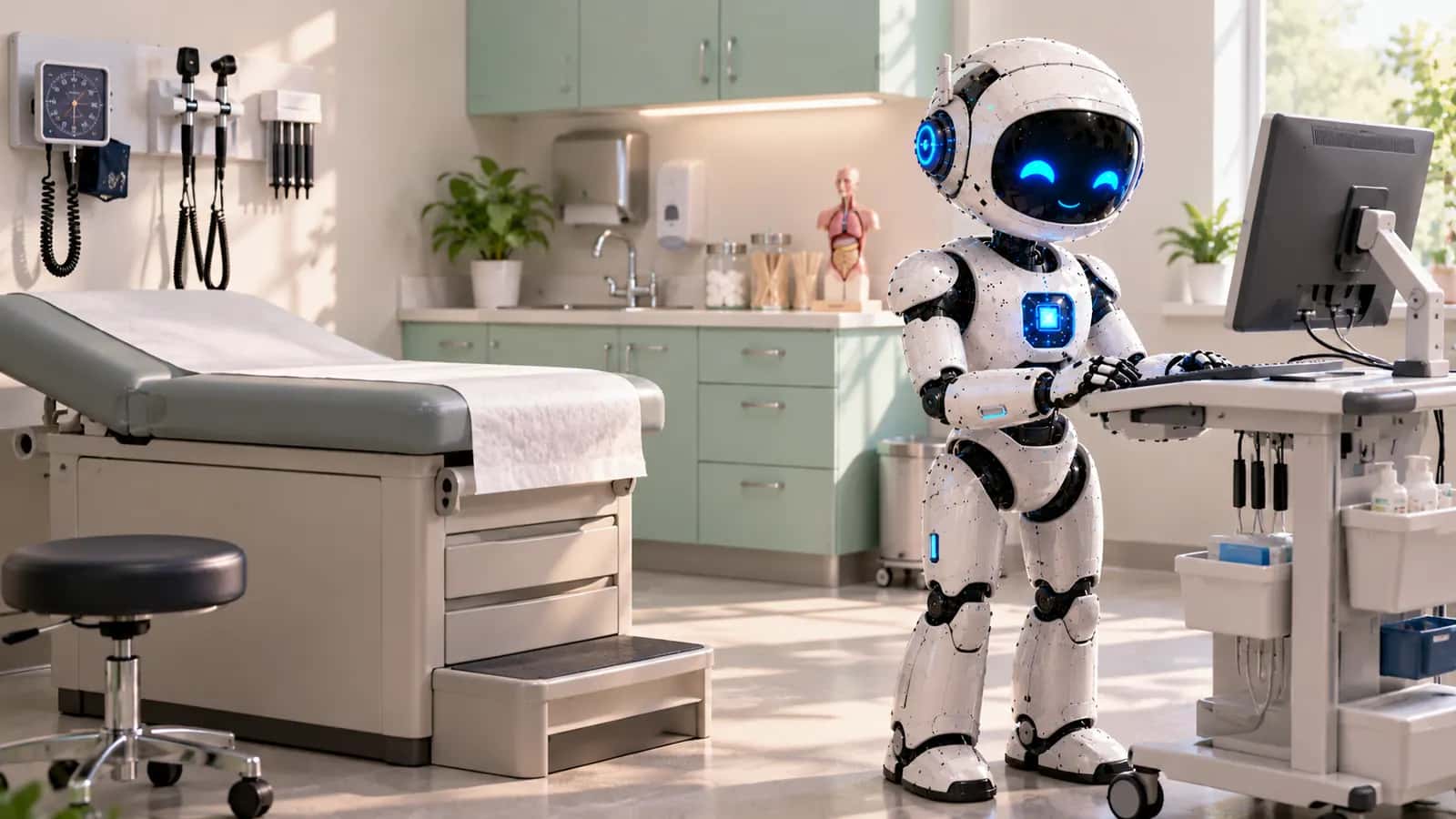
Medical Practice IT Support in Great Neck, NY
For physician offices in Great Neck Plaza and along Northern Boulevard, where a frozen check-in screen backs up the waiting room and a lost e-prescribing token stops refills. NetSys supports the front desk, exam rooms and back office of small practices, protects patient data the way HIPAA expects, and sends engineers from Brooklyn to the suite when hardware needs replacing.
The short answer
NetSys provides IT support for medical offices in Great Neck, NY: help for the front desk and exam rooms, e-prescribing and controlled-substance token management, referral fax and patient portal support, secure Microsoft 365 email, managed endpoint protection, backups and a business firewall. Because Great Neck is in our on-site area, after remote troubleshooting an engineer makes the trip from our Park Slope office for printers, workstations, cabling and network equipment. Solo and small group practices are billed per user each month at a rate set after an assessment.
Work we have done for clients in related fields
- Healthcare
Three-location urgent care group
IT support for 36 workstations, patient data backups, endpoint protection, and secure networking across all three locations.
- Healthcare
Home healthcare agency
Mobile device protection for 73 phones and tablets, secure email access, and remote removal of company data from lost devices.
- Healthcare
Outpatient mental health practice
Support for 32 clinician workstations, secure telehealth access, patient record backups, and phishing protection.
Client names are withheld. These examples were chosen for the work involved, not for where the client is, so none is presented as a Great Neck client.
A working day in a Great Neck physician office
Many medical offices on the peninsula are small: a solo internist above a storefront in Great Neck Plaza, a three-physician specialty practice in a Northern Boulevard medical building, a pediatric office in a building it shares with plastic surgeons, a dentist and an ENT. Parking downtown is tight, patients arrive from the villages and from northeast Queens, and some staff ride the Port Washington Branch, 30 to 40 minutes from Penn Station. The day runs through a handful of systems. The front desk scans insurance cards, checks eligibility and takes copays on a card terminal. Exam rooms open the EHR on shared workstations. Referrals go out by fax or portal to specialists and to North Shore University Hospital in Manhasset, and results come back the same way. Prescriptions leave electronically, as New York has required since 2016. When one link in that chain fails, the waiting room fills. IT support for a Great Neck practice is mostly about keeping the chain unbroken, quietly, from the first appointment to the last.
On-site and remote help for the front desk and exam rooms
When the check-in screen freezes, the office manager calls and an engineer takes control of that PC within minutes; our written commitment for anything that stops the practice working is a ten-minute phone response and a thirty-minute remote response. Staff can reach the desk any day between 4 a.m. and 11 p.m. Eastern, so a physician finishing notes at night is not stranded, and monitoring runs around the clock in between. Some problems need hands: a card reader that has died, a label printer jamming every third label, a cable crushed by a rolling stool, a new exam room that needs a workstation and a wall-mounted screen. For those an engineer drives from Park Slope to Great Neck and does the work, ideally over lunch or after the last patient so the schedule is untouched.
E-prescribing, controlled substances and the tokens behind them
New York has required electronic prescribing for nearly all prescriptions since March 27, 2016, with narrow exceptions such as a temporary technological or electronic failure. Controlled substances raise the bar. The prescribing application must meet federal EPCS criteria, each prescriber files a practitioner EPCS registration with the Department of Health, and DEA rules require two of three factors to sign: a password, a biometric, or a hard token kept separate from the computer. Prescribers also need a Health Commerce System account to consult the prescription monitoring registry. Each piece breaks in its own way: a token left at home, a phone replaced without moving the authenticator, a browser update that upsets the registry site. We keep an inventory of every prescriber's tokens and accounts, a written replacement procedure, and workstations tested against the e-prescribing software after each update.
Referrals, faxes and the patient portal
Referrals are where small practices lose time and leak data. Faxes that land on a machine by the front desk get lost, and faxes routed to a shared inbox get forwarded to personal accounts. We move incoming fax to a secure digital service that files documents into a monitored queue, set rules so referral paperwork stays inside the Microsoft 365 tenant, and turn on encryption for outgoing email that carries patient information. The patient portal raises different issues: patients who cannot log in call the office, and the staff accounts that manage the portal attract phishing. Every staff account that can reach the portal or the EHR gets multifactor sign-in, the front desk is trained to verify a caller before resetting anything, and we watch for mailbox rules that quietly forward messages outside the practice. Phones get the same attention, because a practice that cannot answer calls loses patients.
Everything else about how we serve the area, including coverage, how support is delivered and the honest answer about where our office is, lives on our location page for Great Neck, NY.
Rules that shape IT in a Great Neck medical office
New York's e-prescribing mandate
Public Health Law section 281 makes electronic prescribing the rule for prescriptions issued in New York, for controlled and non-controlled drugs alike, effective March 27, 2016. Exceptions are limited and include a temporary technological or electronic failure, a waiver from the Commissioner of Health, and prescriptions to be filled outside the state. A practice that leans on the failure exception week after week has an IT problem to fix, not a workaround.
DEA two-factor rule for controlled substances
Under 21 CFR 1311.115, signing a controlled-substance prescription electronically requires two of three factors: something the prescriber knows, such as a password; something the prescriber is, such as a fingerprint; and something the prescriber has, a hard token separate from the computer that meets at least FIPS 140-2 Security Level 1. The practice chooses the combination; we make sure the tokens, readers and workstations support it.
HIPAA Security Rule in a small office
Small practices carry the same Security Rule duties as large ones, scaled to their size: a risk analysis, workstation and device safeguards, unique user identification, automatic logoff, audit controls and a contingency plan with backups. Shared front-desk logins and exam-room PCs that never lock are frequent gaps in small offices, and both are inexpensive to close: named accounts with quick PIN or fingerprint sign-in through Windows Hello, and a short automatic lock on every shared screen.
New York breach notice for a medical office
If patient or billing data is exposed, HIPAA notice to patients is due within 60 days of discovery. The state's breach statute, General Business Law 899-aa, also requires notifying three state offices (the State Police, the Department of State and the Attorney General), with a copy to the Attorney General no more than five business days after HHS is told. The office should decide in advance who makes that call. This is general information, not legal advice.
This is general information, not legal advice. Confirm your obligations with counsel.
Medical Practices in Great Neck: FAQs
Who provides IT support for medical offices in Great Neck?
NetSys provides IT support for physician practices in Great Neck, whether a solo office in Great Neck Plaza or a multi-physician specialty practice on Northern Boulevard. We handle the help desk for front-desk and clinical staff, workstation and printer support, e-prescribing token management, secure email and fax, endpoint protection, backups and the office firewall. Hands-on work is done by our engineers from Brooklyn, and there is no long-term contract to sign.
Do you provide on-site IT support to Great Neck medical practices?
Yes. Great Neck is in our on-site area. We fix what we can remotely first, which is usually fastest for the front desk, and send an engineer from Park Slope when hardware is involved: replacing a workstation or card reader, installing a firewall or access point, running cable to a new exam room, or setting up a second office. That work is scheduled around clinic hours whenever possible so patients are not kept waiting.
What does IT support cost for a physician practice in Great Neck?
Practices pay a monthly fee per user, set after we assess the office, and we do not publish prices. The figure depends on the number of staff and providers, how many workstations and exam rooms there are, whether a local server holds images or records, and what the office already has for security and backup. There is no long-term contract. Projects such as moving to a new suite or replacing old Windows 10 machines are quoted separately.
What happens when e-prescribing goes down during clinic hours?
The help desk works out whether the fault is the workstation, the internet connection, the prescriber's token or the e-prescribing service itself, because each has a different fix. Local causes, such as a token, a browser or a network problem, are usually solved remotely within minutes. If the vendor's service is down, we open the ticket with them and keep the office updated. New York's failure exception permits other prescription methods during a genuine technical outage, and the practice should know its own procedure for that.
Do you support our EHR and practice-management software?
We support everything around it and coordinate with the vendor on the application itself. That means workstations configured to the vendor's requirements, printers and scanners that file documents into charts, user accounts with the right permissions, the network and firewall rules the system needs, and backups of any locally stored data. When the software misbehaves, we collect the details, open the vendor ticket and follow it through, so the office manager is not stuck on hold.
How do you help a small practice with its HIPAA risk analysis?
For a solo or small practice the analysis does not have to be elaborate, but it does have to be real. We inventory the devices, accounts, cloud services and vendors that touch patient data, check them against the Security Rule's safeguards, and hand the practice a list of gaps with fixes and costs. Many small practices use the HHS Security Risk Assessment Tool as their framework, and we supply the technical answers it asks for.
Services behind this work
Related pages
Other industries in Great Neck: Healthcare IT Support in Great Neck, NY
Medical Practices elsewhere: Medical Practice IT Support in White Plains, NY · Medical Office IT Support in Westchester County, NY · Medical Practice IT Support in Staten Island, NY · Medical Office IT Support in New York City · IT Support for Brooklyn Medical Offices and Physician Practices · Medical Practice IT Support in Queens, NY · Medical Practice IT Support in Lake Success, NY · Medical Practice IT Support in Nassau County, NY
Everything NetSys delivers in Great Neck, NY.
Scope IT support for your Great Neck team.
Share the applications, deadlines and security and compliance requirements that matter to your business. We will discuss support, security and project responsibilities before agreeing a scope.