
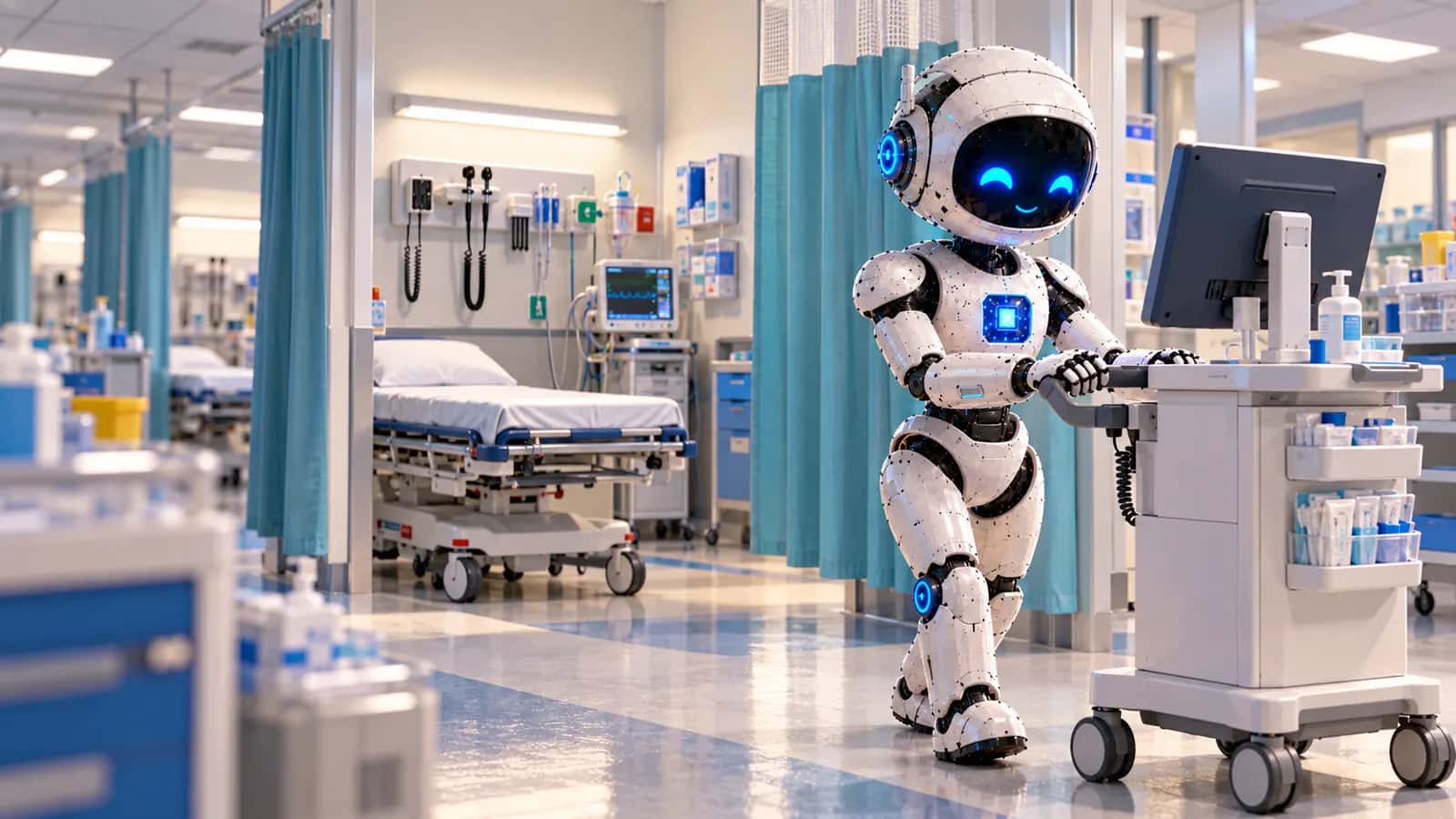
Urgent Care IT Support in Denver, CO
An urgent care center opens early, closes late and works weekends, and every patient arrives without an appointment. When the check-in kiosk freezes, the X-ray workstation cannot send images or the lab interface stops posting results, the waiting room fills within minutes. NetSys supports urgent care centers and walk-in clinics across Denver remotely, with monitoring that watches every system whenever the doors are open.
The short answer
NetSys provides managed IT for Denver urgent care centers and walk-in clinics: monitoring of firewalls, kiosks, imaging and lab workstations, a help desk staffed from 2 a.m. to 9 p.m. Mountain time every day, emergency response at any hour, ThreatDown endpoint protection, segmented networks for payment terminals and guest Wi-Fi, and backups with a tested downtime plan. We also maintain the HIPAA risk analysis and contingency plan. Support is remote and cloud-based from Brooklyn; NetSys does not send engineers on site in Denver, so replacement devices ship preconfigured. Pricing is per user or per device per month after an assessment.
Work we have done for clients in related fields
- Healthcare
Outpatient mental health practice
Support for 32 clinician workstations, secure telehealth access, patient record backups, and phishing protection.
- Healthcare
Three-location urgent care group
IT support for 36 workstations, patient data backups, endpoint protection, and secure networking across all three locations.
- Healthcare
Home healthcare agency
Mobile device protection for 73 phones and tablets, secure email access, and remote removal of company data from lost devices.
Client names are withheld. These examples were chosen for the work involved, not for where the client is, so none is presented as a Denver client.
What changes for a Denver urgent care center
Denver patients with a sprain or a fever can choose among independent urgent care centers, walk-in clinics run by the big health systems and freestanding emergency departments, and they often cannot tell them apart from the parking lot. Colorado drew a legal line in 2019: HB19-1010 created a separate state license for freestanding emergency departments, effective July 1, 2022, and C.R.S. 25-1.5-114 defines them as facilities that offer emergency care, may also offer primary and urgent care, and sit more than 250 yards from a hospital's main campus or independent of one. An urgent care center is the other side of that line, and its systems should say so consistently: the website, the online wait-time display, the kiosk's first screen and the discharge paperwork. Volume in Denver swings with the season and the weather, from flu peaks to spring snow and summer hail, and a center that opens at 8 a.m. on a Saturday cannot wait until Monday for a broken registration workstation. Groups that grow by adding sites in Aurora, Lakewood or Centennial also need every new location built to the same standard as the first, so staff can float between them without relearning the setup.
Uptime through open hours, delivered remotely
Urgent care is judged on whether everything works from opening to close. NetSys watches each center's firewall, switches, access points, kiosks and clinical workstations through NinjaOne and the Meraki or Fortinet cloud console, so a failing disk or a dropped circuit raises an alert before the front desk notices. Our help desk hours of 2 a.m. to 9 p.m. Mountain cover a typical 8 a.m. to 8 p.m. schedule with time to spare, and emergency calls are answered at any hour. Critical issues get a phone response within ten minutes and remote work within thirty. NetSys does not send technicians to Denver centers. Instead, each site keeps a preconfigured spare kiosk tablet and laptop, and we ship replacements already enrolled in Intune; your staff swap the device, or a local cabling contractor handles physical work, while an engineer confirms it is back on the network.
Check-in kiosks, imaging and lab interfaces
The urgent care stack has more moving parts than a physician office. Check-in kiosks and tablets run in a locked kiosk mode through Intune, with ID and insurance-card capture feeding the registration system. Card terminals sit on their own network segment, away from clinical PCs and guest Wi-Fi, which keeps payment systems smaller for PCI DSS. Digital X-ray workstations need storage that does not fill up and a reliable path to send studies to the reading radiologists, whether that is a hosted image archive or a reading service. Lab analyzers and the reference lab exchange orders and results through an interface, and when it stalls, results stop posting to charts without anyone being told. We monitor those interface queues and connections, keep the imaging PCs patched on a schedule the vendor approves, and document each device, its owner and its vendor contact in IT Glue.
When the power or the claims feed goes down
A Denver center needs a plan for losing more than the internet. On April 6, 2024, Xcel Energy shut off power to about 55,000 customers along the Front Range, parts of the west Denver metro among them, to reduce wildfire risk in high winds. The May 8, 2017 hailstorm caused about $2.3 billion in insured losses, the most of any event in Colorado's history. In February 2024 the ransomware attack on Change Healthcare stopped claims and pharmacy transactions for providers across the country for weeks. Our continuity plan for an urgent care site includes UPS units sized for the kiosk, the registration PCs and the network rack, a cellular backup circuit on the firewall, a paper downtime kit for registration and charting, read-only access to the EHR from any connection, nightly off-site backups of data the center controls and a second claims route that billing staff have tested.
Everything else about how we serve the area, including coverage, how support is delivered and the honest answer about where our office is, lives on our location page for Denver, CO.
Compliance rules for Denver urgent care centers
HIPAA Security Rule: risk analysis and contingency plan
Beyond the risk analysis every covered entity must perform, the Security Rule requires a contingency plan (45 CFR 164.308(a)(7)) covering data backup, disaster recovery and an emergency mode of operation. For a walk-in center that means a written, tested way to keep registering and treating patients while systems are down. HHS's January 2025 proposed Security Rule changes remain a proposal, not current law.
Colorado's 30-day breach notice
C.R.S. 6-1-716 gives a business 30 days after determining a breach to notify affected Colorado residents, plus the Attorney General when 500 or more are affected. The Attorney General's guidance is explicit that a HIPAA-covered provider follows the shorter Colorado timeframe even where HIPAA permits up to 60 days, so the incident runbook has to start the clock early.
PCI DSS v4.0.1 for card payments at the front desk
Centers that take copays by card fall under the payment card standard. The 51 future-dated requirements in PCI DSS v4.x became mandatory on March 31, 2025, including stronger authentication and protection of online payment pages. Segmenting card terminals and using a hosted payment page keeps the scope, and the annual questionnaire, as small as possible.
Colorado's freestanding emergency department license
Since July 1, 2022, a facility that offers emergency care away from a hospital campus needs its own state license under HB19-1010. An urgent care center that is not licensed that way should not describe itself as an emergency department in signage, kiosk screens or online listings. Your counsel decides the classification; we keep the systems consistent with it. This is general information, not legal advice.
This is general information, not legal advice. Confirm your obligations with counsel.
Urgent Care Centers in Denver: FAQs
Who provides IT support for urgent care centers in Denver?
NetSys provides it remotely from its only office, in Brooklyn, NY. Since 1998 we have run IT for businesses that cannot afford downtime, and for urgent care that means monitoring every kiosk, workstation and circuit, a help desk staffed every day of the week, endpoint protection, segmented networks and backups with a tested downtime plan. Each group has a dedicated account manager with a real cell number, and agreements run month to month. We do not claim a Denver office or local staff.
How does IT support work for Denver urgent care centers?
Support is remote and cloud-based. Monitoring runs 24/7, the help desk is staffed from 2 a.m. to 9 p.m. Mountain seven days a week, and emergencies reach an engineer at any hour. NetSys does not send engineers on site in Denver, so we plan for that: each center keeps preconfigured spares, replacement kiosks and laptops ship already enrolled, and your staff or your own cabling contractor handles physical work while an engineer watches the device come back online.
What does IT support cost for an urgent care center in Denver?
We price per user or per device per month after an assessment, and we do not publish a rate. Device-based pricing often suits urgent care, where shared kiosks and clinical workstations outnumber named users. The fee moves with the number of sites, imaging and lab interfaces, the payment setup, after-hours coverage beyond monitoring and the compliance documentation we maintain. Opening a new location is quoted as a project, with a checklist that copies the standard from your existing sites.
Can you cover our extended evening and weekend hours?
Yes. The help desk is staffed until 9 p.m. Mountain every day, weekends and holidays included, which covers most urgent care schedules. Monitoring, emergency service and ThreatDown's managed detection and response run around the clock, so an overnight alert about a failing backup or a suspicious sign-in is handled before morning. Severe problems such as ransomware, systems down or no internet go straight to your dedicated engineer rather than into a queue.
Do you support our urgent care EHR and check-in platform?
We support the infrastructure those platforms run on: the kiosks and tablets in kiosk mode, the registration and clinical workstations, browser and certificate settings, scanners and label printers, single sign-on, and the network path to each vendor. Inside the application, the vendor stays responsible, and we work their tickets with them, providing logs and test results. We keep a record of each platform's admin contacts, interfaces and renewal dates so nothing depends on one office manager remembering them.
How do you keep several urgent care locations on the same standard?
With a written site build. Every center gets the same firewall template, switch and Wi-Fi configuration, network segments for clinical, payment and guest traffic, Intune profiles for kiosks and workstations, and the same backup and downtime kit. A new location follows that checklist, with equipment shipped preloaded and a cutover call scheduled before opening day. Staff who float between centers find the same sign-ins and printers at each, and our monthly report shows where any site has drifted.
Services behind this work
Related pages
Other industries in Denver: IT Support for Accounting Firms in Denver, CO · IT Support for Architecture Firms in Denver, CO · Dental Office IT Support in Denver, CO · IT Support for Financial Services in Denver, CO · Healthcare IT Support in Denver, CO · IT Support for Law Firms in Denver, CO · Logistics IT Support in Denver, CO · Manufacturing IT Support in Denver, CO · Medical Practice IT Support in Denver, CO · IT Support for Professional Services in Denver, CO · Wealth Management IT Support in Denver, CO
Urgent Care Centers elsewhere: Urgent Care IT Support in Westchester County, NY · Urgent Care IT Support in Fairfield County, CT · Urgent Care IT Support in Bergen County, NJ · Urgent Care IT Support in Staten Island, NY · Urgent Care IT Support in New York City · Urgent Care IT Support in Brooklyn, NY · Urgent Care IT Support in Queens, NY · Urgent Care IT Support in Nassau County, NY
Everything NetSys delivers in Denver, CO.
Scope IT support for your Denver team.
Share the applications, deadlines and security and compliance requirements that matter to your business. We will discuss support, security and project responsibilities before agreeing a scope.