
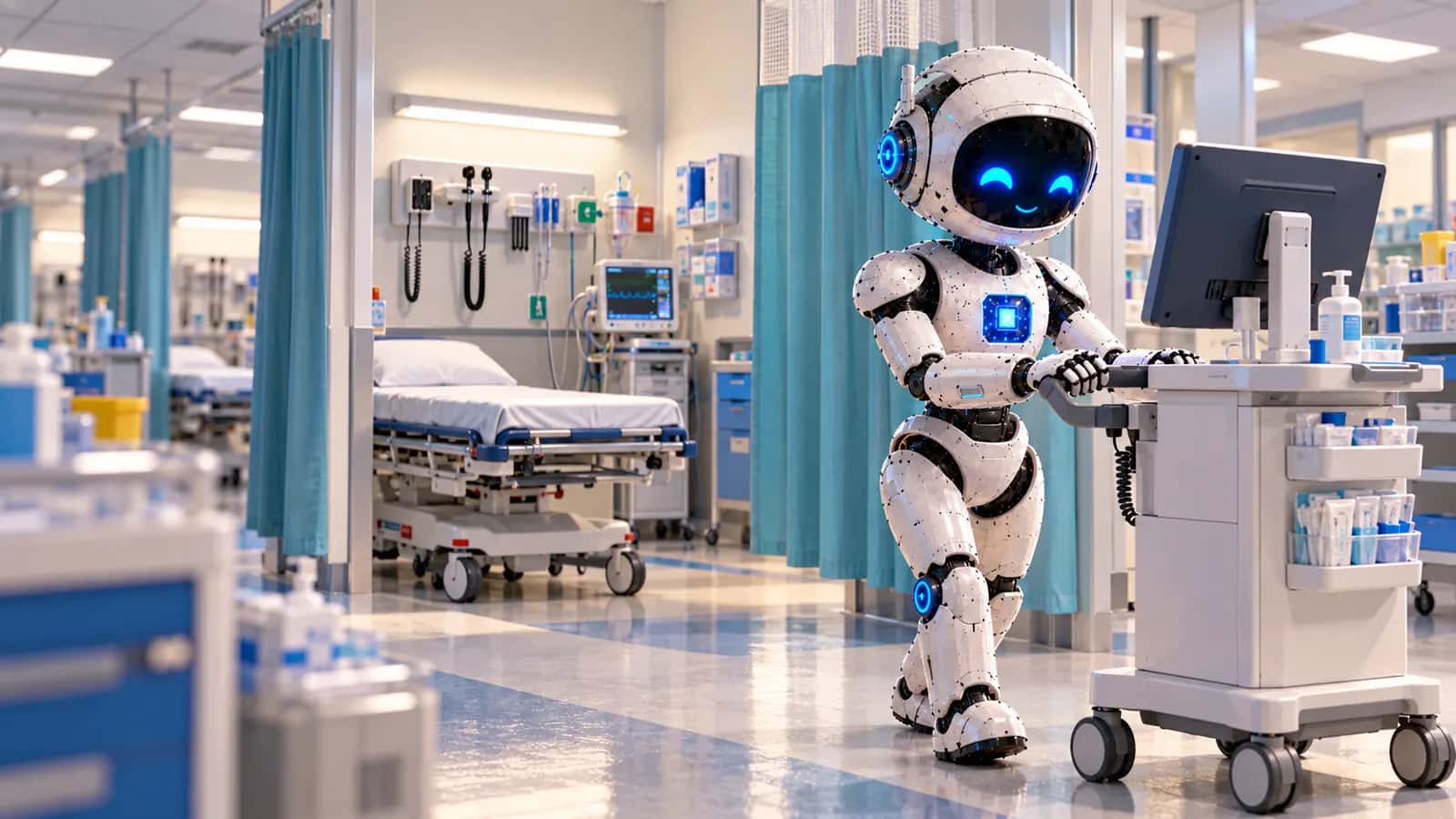
Urgent Care IT Support in Los Angeles, CA
For walk-in clinics and urgent care groups across Los Angeles, from the Valley to the Westside and the South Bay, where a frozen check-in kiosk or a broken lab interface backs up a waiting room within minutes. NetSys keeps the front desk, exam rooms, imaging, e-prescribing and network running and secure, managed remotely from Brooklyn under month-to-month terms.
The short answer
NetSys provides urgent care IT support in Los Angeles: management of check-in kiosks and front-desk PCs, exam-room devices, digital X-ray workstations, lab and imaging interfaces, e-prescribing with two-factor sign-in for controlled substances, phones, Wi-Fi and HIPAA safeguards, with tested backups and a failover internet circuit. Support is remote only; NetSys does not send engineers to Los Angeles clinics. Engineers staff the help desk from 1 a.m. to 8 p.m. Pacific every day, and 24/7 monitoring and emergency service cover the late evening hours many centers stay open. Pricing is per user or per device per month.
Work we have done for clients in related fields
- Healthcare
Three-location urgent care group
IT support for 36 workstations, patient data backups, endpoint protection, and secure networking across all three locations.
- Healthcare
Home healthcare agency
Mobile device protection for 73 phones and tablets, secure email access, and remote removal of company data from lost devices.
- Healthcare
Outpatient mental health practice
Support for 32 clinician workstations, secure telehealth access, patient record backups, and phishing protection.
Client names are withheld. These examples were chosen for the work involved, not for where the client is, so none is presented as a Los Angeles client.
What urgent care IT looks like in Los Angeles
Urgent care in Los Angeles is a volume business spread across an enormous map. Centers sit in strip malls and medical buildings along Ventura, Wilshire, Sepulveda and Atlantic boulevards, and many belong to hospital systems or regional groups that run a dozen sites with one small IT team. Each site packs a lot into a few rooms: self-service check-in kiosks or tablets, insurance card scanners, two or three front-desk PCs, exam-room workstations, a digital X-ray unit with its own acquisition PC, point-of-care lab analyzers, label and wristband printers, card terminals and a phone system that cannot drop calls. The software behind them is usually a cloud practice management and EHR platform with interfaces to outside labs, radiologists who read images remotely and a billing clearinghouse. The February 2024 Change Healthcare attack showed what one clearinghouse outage does to claims and eligibility checks across the country. Long days add pressure of their own: when doors open early and close late, every outage happens with patients in the lobby. Power adds a wrinkle too, since the city is served by LADWP while much of the county runs on Southern California Edison, so outage reporting differs from site to site.
Remote support for clinics that keep long hours
NetSys supports Los Angeles urgent care centers entirely from Brooklyn; we do not send technicians to clinics. Engineers staff the help desk seven days a week from 1 a.m. to 8 p.m. Pacific, so the morning opening, the lunch rush and weekend surges are covered by people. A center that stays open until 9 or 10 p.m. is covered after 8 p.m. by 24/7 monitoring and emergency service: a down network, a ransomware alert or a failed internet circuit goes straight to the clinic's dedicated engineer, while a routine printer request waits for morning. Critical issues get a phone response within ten minutes and remote work within thirty. We recommend each site keep a small set of configured spares, such as an access point and a backup kiosk tablet, so staff can swap hardware with an engineer on the phone.
Kiosks, the front desk and the imaging and lab chain
Most urgent care slowdowns start in one of two places. The first is check-in: kiosks and tablets that lose Wi-Fi, card scanners that need a driver, or a front-desk PC that freezes during insurance verification. We lock kiosks into single-app mode through Intune, keep them on a dedicated wireless network, and monitor them so a dead unit is flagged before the line grows. The second is the clinical chain: the X-ray acquisition PC, its link to the image archive and the remote radiologist, and the lab analyzers' interface to the EHR. We document each interface, its vendor and its test procedure, hold Windows updates on acquisition PCs until the imaging vendor approves them, and alert when a lab or imaging queue stops moving.
Smoke, quakes, outages and phishing: continuity for LA clinics
Los Angeles clinics have to plan for disasters that bring patients in while knocking systems out. In January 2025 the Palisades and Eaton fires destroyed more than 16,000 structures between them, according to Cal Fire, and on January 10 the county declared a local health emergency over the fires and windstorm, banning leaf blowers that stir up ash. Earthquakes remain the region's defining risk. Cyber risk is closer than it looks: a February 2024 phishing campaign compromised accounts at 25 of the county's 38 departments, and the Department of Public Health later notified more than 200,000 people. We give each center a cellular backup circuit, battery backup for network gear and any server closet, cloud backups outside Southern California, phishing-resistant multifactor sign-in, and a written downtime procedure for registering patients on paper.
Everything else about how we serve the area, including coverage, how support is delivered and the honest answer about where our office is, lives on our location page for California.
Rules that shape urgent care IT in Los Angeles
HIPAA Security Rule
A center that submits claims electronically is a covered entity under HIPAA, and the Security Rule requires a documented risk analysis, access controls, audit controls, integrity protections and transmission security for electronic protected health information, plus contingency plans for emergencies and outages. HHS proposed an update to the Security Rule in January 2025, but it is a proposal, not current law. NetSys signs a business associate agreement and keeps the risk analysis, policies and supporting evidence current.
California's CMIA and clinic breach reporting
The Confidentiality of Medical Information Act (Civil Code section 56 and following) limits how California providers use and disclose medical information and lets patients sue over unauthorized releases. If the center holds a clinic license under Health and Safety Code section 1204, section 1280.15 requires reporting unauthorized access, use or disclosure of patient medical information to the California Department of Public Health and to the patient within 15 business days of detection. Centers run as physician practices often have no clinic license, so confirm which applies.
E-prescribing, controlled substances and CURES
Since January 1, 2022, Business and Professions Code section 688 has required California prescribers to issue prescriptions electronically, with narrow exemptions; one lets an urgent care clinic hand an electronically issued prescription to a patient who lives outside the area or whose pharmacy is likely closed. Controlled-substance prescriptions must also meet DEA rules for electronic prescribing, including two-factor authentication, and prescribers generally must check a patient's CURES history before a first Schedule II, III or IV prescription. We keep the tokens, authenticator apps and workstations those steps rely on working.
Breach notice and reasonable security
Civil Code 1798.82 requires notifying California residents when their unencrypted personal information is acquired in a breach, with a sample notice to the Attorney General when more than 500 residents are notified, and section 1798.81.5 requires reasonable security for that information. Encryption on every laptop, tablet and phone changes the outcome, because encrypted data generally falls outside the notice duty unless the key was also compromised. This is general information, not legal advice.
This is general information, not legal advice. Confirm your obligations with counsel.
Urgent Care Centers in Los Angeles: FAQs
Who provides IT support for urgent care centers in Los Angeles?
NetSys supports urgent care centers and walk-in clinics across Los Angeles remotely from its Brooklyn office. We manage kiosks, front-desk and exam-room devices, imaging and lab connections, e-prescribing access, networks, phones, security and backups, and we work the support case with your EHR, imaging and lab vendors. NetSys does not send engineers to Los Angeles, so equipment ships configured for your staff to connect. Agreements run month to month, with a business associate agreement in place from the first day.
How does IT support work for Los Angeles urgent care organizations?
Remotely, with the hours stated plainly. Engineers answer seven days a week from 1 a.m. to 8 p.m. Pacific. After that, 24/7 monitoring and emergency service take over, so a clinic open until 10 p.m. still reaches an engineer for a network outage, a ransomware alert or a dead circuit, while routine requests wait until morning. Every center has a dedicated engineer for severe issues and an account manager with a real cell number. Replacement hardware ships preconfigured to the clinic.
What does IT support cost for an urgent care center in Los Angeles?
It is priced per user or per device per month after an assessment, and we do not publish a number. Urgent care pricing usually counts devices as much as people, because kiosks, exam-room PCs and imaging workstations are shared. The other drivers are the number of sites, whether an on-premises server or image archive stays, how many vendor interfaces we monitor, and the HIPAA documentation you want maintained. Monitoring, patching, security tools, backups and vendor coordination are included; hardware and new-site buildouts are quoted separately.
Can you keep the clinic running if the internet goes down?
Yes, with planning. Each site gets a second internet path, usually a cellular or 5G router on a different carrier, and the firewall switches to it automatically and alerts us. Card terminals and the phone system are configured to follow. Because most urgent care EHRs are cloud hosted, we also set up a downtime kit: a recent schedule export, paper registration forms and a procedure for entering patient visits afterward. We test failover during a quiet hour, so staff know what it looks like before it happens on a busy Saturday.
Do you work with our EHR, imaging and lab vendors?
Yes. We do not replace those systems or claim to administer them, but we own everything they depend on: the workstations, browsers and drivers, the network paths and firewall rules, the interface PCs and the support cases. When an X-ray image does not reach the radiologist or lab results stop posting, we check our side, gather logs and open the case with the vendor, then stay on it until results flow again. Vendor contacts and interface details are kept in IT Glue.
Is patient data safe on kiosks and tablets in the waiting room?
It can be, with the right setup. Kiosks run in single-app mode through Intune, sign out after each patient, store nothing locally and sit on a network segment that can reach only the check-in service. Tablets are encrypted and can be wiped remotely if one walks out the door. Privacy screens and careful placement keep insurance cards and histories away from the next person in line. We review kiosk activity during the HIPAA risk analysis and document the controls.
Services behind this work
Related pages
Other industries in Los Angeles: IT Support for Accounting Firms in Los Angeles, CA · IT Support for Architecture Firms in Los Angeles, CA · Dental Office IT Support in Los Angeles, CA · IT Support for Financial Services in Los Angeles, CA · Healthcare IT Support in Los Angeles, CA · IT Support for Law Firms in Los Angeles, CA · Logistics IT Support in Los Angeles, CA · Manufacturing IT Support in Los Angeles, CA · Medical Office IT Support in Los Angeles, CA · IT Support for Professional Services in Los Angeles, CA · Wealth Management IT Support in Los Angeles, CA
Urgent Care Centers elsewhere: Urgent Care IT Support in Westchester County, NY · Urgent Care IT Support in Fairfield County, CT · Urgent Care IT Support in Bergen County, NJ · Urgent Care IT Support in Staten Island, NY · Urgent Care IT Support in New York City · Urgent Care IT Support in Brooklyn, NY · Urgent Care IT Support in Queens, NY · Urgent Care IT Support in Nassau County, NY
Everything NetSys delivers in California.
Scope IT support for your Los Angeles team.
Share the applications, deadlines and security and compliance requirements that matter to your business. We will discuss support, security and project responsibilities before agreeing a scope.